

➡️3. Green Smoothies: Your Arteries’ Cleaning Service
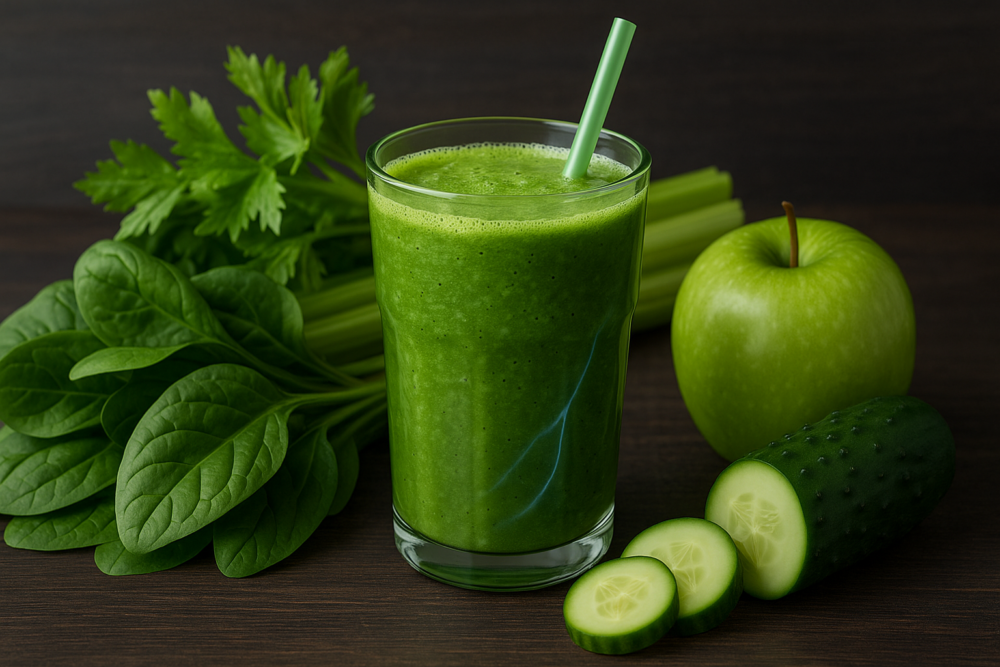
Now we come to the number one drink for your morning circulation: green juices. Many people only associate these drinks with diets and weight loss, but their true power is in circulation. And the best part is you can make them with simple ingredients you probably already have in your fridge.
A well-made green smoothie, like the one we’re about to discuss, is like a cleaning service for your arteries. The chlorophyll in green leaves has a structure similar to the hemoglobin in your blood. When you drink these smoothies, it’s like giving your blood the materials it needs to renew itself, and new blood means better circulation.
So, let’s start with the first ingredient: spinach. A handful of steamed spinach in your morning smoothie provides natural nitrates, like beetroot, but also folate, which helps reduce homocysteine, a compound that inflames your arteries when it’s high. This helps you prevent long-term problems like hardening of the arteries.
Cucumber is the next hero. Many people see it as just watery, but cucumber gives you silica, a mineral that strengthens the walls of your blood vessels. It also has potassium, which helps regulate your blood pressure. And its high water content makes the smoothie lighter and easier to digest in the morning.
The next ingredient is celery, which contains a compound called cemferol, which relaxes arteries. It’s like an internal massage for your circulatory system. Half a stalk of celery in your smoothie can make a difference in how you feel, helping blood flow more easily. And its slightly salty taste balances the sweetness of other ingredients.
And here, the green apple is the master ingredient. It not only sweetens naturally without spiking your blood sugar, but its antioxidants, especially quercetin, protect your arteries from daily damage. And pectin, its soluble fiber, helps clean cholesterol from your blood. A small apple is enough to transform the taste. You can add it with the skin, well-washed, to get all its fiber.
Preparation is simple, but there are tricks. First, wash all vegetables well. Then, steam the spinach for 5 minutes to remove its anti-nutrients. After that, you can start by blending the harder ingredients with a little water, like celery and apple. Once they’re blended, add the spinach and cucumber. This prevents leafy bits from floating around.
The ideal ratio to start with might be a handful of spinach, half a cucumber, half a stalk of celery, half a green apple, and a glass of water. If it’s too thick, add more water. If the green taste is too strong, increase the apple. Over time, your taste buds will adapt, and you can reduce the fruit.
The timing matters. This smoothie is ideal on an empty stomach. Nutrients are absorbed better, and the fiber keeps you full until your main breakfast. It’s good to drink it slowly, savoring each sip. This activates digestive enzymes and improves absorption.
➡️2. Coffee: A Surprising Ally for Circulation

Now let’s talk about the world’s most popular morning drink: coffee. That dark cup that, for many, marks the true start of the day. For years, doctors warned against it, while we ourselves drank liters to get through shifts. Today, science tells a different story. Black coffee, without additions, is a concentrated source of antioxidants. The chlorogenic acids it contains protect the cells lining your arteries. Every sip is like giving a protective shield to your endothelium, and when these cells are healthy, your blood flows without obstacles.
Plus, caffeine does more than just wake you up; it boosts your metabolism and makes you want to move. And movement is medicine for your circulation. When you feel more active after coffee, your blood pumps better, your muscles demand more oxygen, and your entire circulatory system gets a boost. In fact, we now know that drinking two or three cups of coffee a day is linked to a lower risk of heart problems. Moderate coffee drinkers have more flexible arteries, fewer plaques, and better blood flow.
But let’s clear up the biggest myth: that coffee always dangerously raises blood pressure. The truth is more nuanced. If you drink coffee regularly, your body adapts. Blood pressure might go up by 10 points for 30 minutes, then return to normal. It’s a temporary effect, not a long-term problem.
And here’s the twist: coffee can go from ally to enemy in seconds. How? First, with what you add to it. That large latte with caramel syrup is no longer coffee; it’s a liquid dessert. And those processed plant creams we saw earlier also ruin coffee. Hydrogenated oils, corn syrup, unpronounceable chemicals. You turn an antioxidant drink into an inflammatory bomb.
Excess is another problem. More than five cups a day can spike your cortisol. This stress hormone, when high all the time, damages your arteries, causes heart palpitations, and interferes with sleep. And poor sleep means poor circulation. Everything is connected.
Your genetics also play a role here. Some people process caffeine quickly; they can drink coffee at 6 PM and sleep well. Others process it slowly. One cup at noon keeps them awake. If you’re a slow metabolizer, coffee after noon sabotages your rest and your nighttime circulation.
So, how do you make coffee your ally? First, choose whole bean coffee, freshly ground if possible. Natural roasting preserves more antioxidants. And drink it black or with minimal additions. If you need some milk, use a small amount of quality plant milk or homemade milk without additives. You can add a pinch of cinnamon for more flavor and to help with blood sugar. And above all, remember that two or three cups a day is the sweet spot for benefits without the problems of excess.
➡️1. Golden Milk: A Healing Elixir for Your Arteries

Speaking of conscious choices, the next drink is pure liquid nutrition: golden milk. Traditionally a nighttime drink, it can adapt very well for mornings. And when you prepare it well, you give your body a warm hug from the inside.
The star here is turmeric, that yellow spice that stains everything it touches. Curcumin, its active compound, is one of the most powerful natural anti-inflammatory agents out there. But here’s the problem: your body barely absorbs it. Luckily, black pepper is the secret key; it contains piperine, which increases curcumin absorption by up to 20 times.
Of course, the morning version needs adjustments. The traditional nighttime recipe uses a lot of fat. In the morning, this can be heavy. The solution is to use less and choose lighter fats. A teaspoon of coconut oil is enough if you want it. Or you can use almond milk, which already has natural fat. Ginger appears here again, but with a different role. In golden milk, it not only improves circulation but also helps turmeric dissolve better. Here, half a teaspoon of powdered ginger or a small grated piece works very well.
Cinnamon is the ingredient many forget but shouldn’t. This common spice helps regulate blood sugar, and when your blood sugar is stable, your circulation improves.
Why is this combination so powerful for morning circulation? Each spice attacks inflammation from a different angle. Turmeric calms general inflammation. Ginger widens blood vessels. Pepper improves absorption, and cinnamon stabilizes your metabolism. Together, they create synergy.
Preparation requires attention. First, heat a cup of plant milk over medium heat. Almond milk works well, but oat milk is creamier. When it’s warm, add half a teaspoon of turmeric, a quarter of ginger, a pinch of black pepper, and a quarter of cinnamon. The secret is to cook the spices. Let the mixture simmer gently for 5 minutes. This activates the compounds and makes them more available to your body. Stir constantly so it doesn’t stick. The color should be an intense golden yellow. If it’s pale, you need more turmeric.
And here’s a trick: if making golden milk every time seems like too much work, there’s a shortcut. You can prepare a spice paste. Mix four tablespoons of turmeric, two of powdered ginger, half of black pepper, and one of cinnamon. Store it in a jar. In the morning, add a teaspoon to your hot milk. Five minutes of cooking, and it’s ready.
However, there are important precautions. If you take blood thinners, it’s good to consult your doctor. Turmeric can increase their effect. If you have gallstones, it’s best to avoid it. And if you notice heartburn, you can reduce the amount of spices or take it with some food.
This golden drink is different from all the others. It’s not refreshing like lemon water. It’s not energizing like green tea. It’s not as nutritious as the green smoothie. But it’s restorative. It works on the deep causes of poor circulation: chronic inflammation. And when you reduce inflammation, everything flows better. Some people prefer to drink it in the evening when the body relaxes, but in the morning, especially on cold days, it’s like lighting an internal fireplace.
✅Key Takeaways
- Warm Water with Lemon and Ginger: Gently wakes up digestion and widens blood vessels for better flow.
- Green Tea: Protects arteries and provides calm, sustained energy without jitters.
- Hibiscus Tea: Helps relax blood vessels and can naturally lower blood pressure.
- Beetroot Juice: A powerful booster for blood flow, especially when combined with movement.
- Green Smoothies: Act as an internal cleaning service for arteries, providing essential nutrients.
- Black Coffee: A source of antioxidants that protect arteries and stimulate metabolism.
- Golden Milk: Fights chronic inflammation, addressing a root cause of poor circulation.
So there you have it. Seven powerful drinks to boost your morning circulation, from simple lemon water to nourishing golden milk. And now you know the enemies: sugary juices, overly elaborate coffees, and those ultra-processed plant milks that seem healthy but inflame your arteries. The key is to choose consciously. Start with one drink this week, prepare it well, and give your body time to respond. If you’re consistent, your circulation will improve sip by sip, and your mornings will never be the same.