
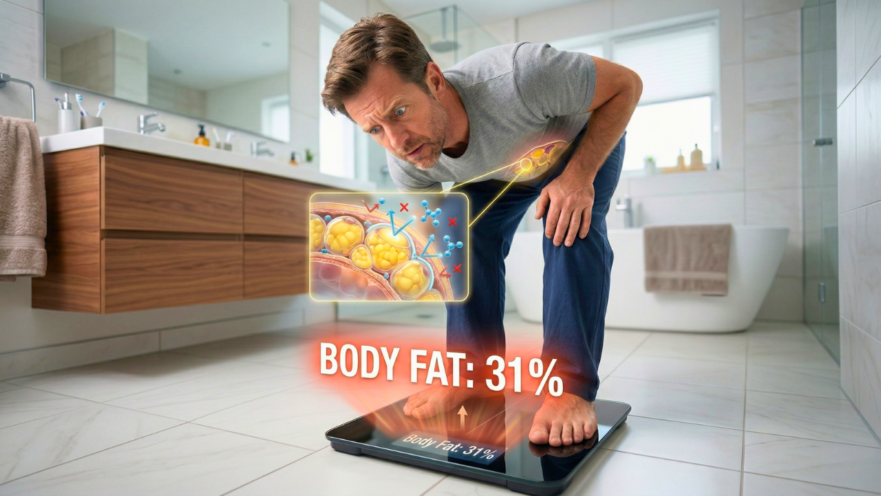

What if I told you there’s a simple, reliable way to know if you have insulin resistance, all without needing a single needle, a complicated lab test, or an expensive medical scan? It’s a question I get all the time, and the answer is surprisingly straightforward. Many people walk around with insulin resistance for years, completely unaware that their body is struggling. This silent condition can pave the way for serious health issues down the road, but spotting it early is the key to turning things around. You don’t need to be a doctor or have fancy equipment to get a major clue about your metabolic health. The answer is likely sitting right in your own bathroom.
In this article, we’re going to cut through the confusion and give you the single most effective way to gauge your insulin resistance risk at home. Forget guesswork. We’re talking about a measurable, trackable number that has an incredibly high correlation with insulin resistance. Understanding this one metric can empower you to take control of your health, reverse the trend, and prevent future problems before they start. So, if you’re ready to stop wondering and start knowing, let’s dive in. (Based on the insights of Dr. Suneel Dhand)
Key Takeaways
- The #1 Indicator: The most reliable, non-medical sign of insulin resistance is having an excessive amount of body fat. There’s a greater than 90% chance that if you have too much body fat, you also have insulin resistance.
- Why It Matters: Excess body fat isn’t just a cosmetic concern; it’s a metabolically active tissue that produces inflammation, driving up your risk for type 2 diabetes, heart disease, and other chronic illnesses.
- Easy At-Home Measurement: You can easily and affordably track your body fat percentage at home using a modern body fat scale, which uses bioelectrical impedance to give you a clear picture of your body composition.
- Know Your Numbers: For men, a body fat percentage over 20% starts to become a problem. For women, that threshold is around 28-30%. Ideally, you want to aim for numbers lower than these averages for optimal metabolic health.
- Action is Key: Discovering you have high body fat isn’t a diagnosis of failure; it’s a powerful call to action. It’s the first step toward making targeted lifestyle changes to improve your insulin sensitivity and overall well-being.
1. What Is Insulin Resistance, Really?
Before we talk about how to spot it, let’s quickly demystify what insulin resistance actually is. Think of insulin as a key. When you eat carbohydrates or protein, your blood sugar rises, and your pancreas releases insulin into your bloodstream. This insulin travels to your body’s cells—in your muscles, fat, and liver—and acts like a key to unlock them, allowing glucose (sugar) to move from your blood into the cells to be used for energy. It’s a perfect system that keeps your blood sugar levels stable.
Insulin resistance is what happens when the locks on your cells get rusty. Your cells stop responding properly to the insulin key. They become “resistant.” In response, your pancreas thinks, “The key isn’t working, so I must not be sending enough!” and it starts pumping out even more insulin to try to force the cell doors open. For a while, this works. Your pancreas goes into overdrive to keep your blood sugar in a normal range. But this can’t last forever. Eventually, the pancreas can get worn out, or the cells become so resistant that even a flood of insulin can’t manage your blood sugar. This is when you cross the line into pre-diabetes and, eventually, type 2 diabetes. But the problem—the insulin resistance—started years, or even decades, earlier.
2. The Strongest Clue: Your Body Fat Percentage
So, how do you know if this process is happening inside you? While things like skin tags, constant hunger, and fatigue after meals are all potential signs, the single most powerful and quantifiable indicator you can measure at home is your body fat percentage. Why? Because there is an over 95% probability that if you have an excessive amount of body fat, you have some degree of insulin resistance.
This connection is not a coincidence. In fact, the accumulation of body fat is often a direct consequence of insulin resistance already being present. When your cells are resistant to insulin, your body struggles to use glucose for energy. That excess glucose has to go somewhere, and with high levels of insulin also in your blood (a hormone that promotes fat storage), your body’s default action is to convert that sugar into fat and store it. It becomes a vicious cycle: insulin resistance causes fat gain, and that excess fat then makes the insulin resistance even worse. This is why simply looking at your body fat percentage gives you such a clear window into your metabolic health.
3. Why Excess Fat Is a Metabolic Disaster
It’s crucial to shift your thinking about body fat. It is not just an inert substance that affects how your clothes fit. Adipose tissue (the medical term for body fat) is an active endocrine organ. This means it produces and secretes hormones and signaling molecules, and when you have too much of it, the signals it sends are overwhelmingly negative. Excessive body fat is profoundly pro-inflammatory.
This chronic, low-grade inflammation is the root cause of many modern diseases. As your fat cells multiply and grow, they release inflammatory substances called cytokines that travel throughout your body, creating systemic inflammation. This is why being overweight or obese isn’t a cosmetic issue; it’s a serious health issue. This inflammation directly worsens insulin resistance, increases your risk of type 2 diabetes, and contributes to a host of other problems. The risk of heart disease soars, as does the likelihood of developing non-alcoholic fatty liver disease, certain types of cancer, autoimmune disorders, and other inflammatory conditions. Your body is in a constant state of metabolic stress, a disaster waiting to happen. Knowing your body fat percentage is the first step to putting out that fire.
4. How to Measure Your Body Fat at Home
The good news is that you don’t need an expensive DEXA scan to get a good handle on your body fat. The most accessible tool is a body fat measurement scale. Many modern digital scales, often called “smart scales,” use a technology called Bioelectrical Impedance Analysis (BIA). It sounds complex, but it’s quite simple. When you step on the scale, it sends a tiny, completely safe electrical current up one leg and down the other.
Because fat, muscle, and water conduct electricity differently, the scale can measure the resistance (or impedance) to this current and use that data to estimate your body fat percentage, muscle mass, water content, and more. While it’s true that these scales aren’t 100% accurate down to the decimal point, their real power lies in tracking trends. By measuring yourself consistently—for example, every morning after using the restroom but before eating or drinking—you can get a very reliable picture of whether your body composition is moving in the right direction. For a small investment, you gain an invaluable tool for monitoring your metabolic health journey.
5. Understanding the Numbers: What’s a Healthy Body Fat Percentage?
Once you have your number, you need to know what it means. Body fat percentage norms differ significantly between men and women, primarily for evolutionary reasons, as women naturally carry more fat tissue. The numbers also change slightly with age. Let’s use a 50-year-old as a general example.
- For Men: The point at which body fat starts to become a significant metabolic problem is around 20%. If your number is creeping above this, it’s a clear sign that you likely have underlying insulin resistance. While 20% might be considered “average” in the general population, it is not ideal. For optimal health, a man should aim for a body fat percentage under 15%.
- For Women: Because women naturally have more body fat, the numbers are higher. The problem zone for a 50-year-old woman begins around 28% to 30%. As your percentage gets above this level, your health risks increase substantially. Again, this is a cutoff, not an ideal. An ideal body fat percentage for a woman would be under 20-22%, though this can be challenging to achieve. The key is to ensure you are not in the problematic range.
Don’t aim for an elite athlete’s body fat percentage unless that’s your specific goal. The objective here is to get out of the danger zone and into a healthy, sustainable range that minimizes inflammation and supports good insulin sensitivity.
Conclusion
Stop guessing about your health. You don’t need to wait for a doctor’s appointment or a blood test to get a powerful insight into your metabolic health. Your body fat percentage is the single best correlation with insulin resistance that you can easily and affordably track at home. It’s a clear, unbiased number that tells a story about what’s happening inside your body. Seeing a high number isn’t a reason for despair; it’s a moment of empowerment. It’s the data you need to start making meaningful changes. By understanding this one simple metric, you can take the first and most important step toward reversing insulin resistance, reducing inflammation, and reclaiming your long-term health and vitality.
Source: Dr. Suneel Dhand