
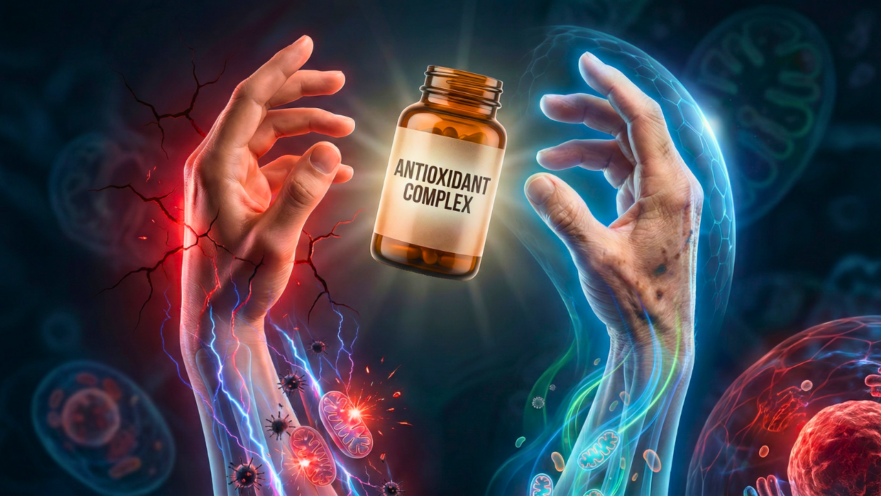

If you’ve ever strolled down the vitamin aisle or scrolled through wellness blogs, you’ve probably seen antioxidants touted as miracle workers—extending lifespan, protecting the heart, and keeping you youthful. A few decades ago, antioxidants were the talk of the town. But then, almost suddenly, everyone stopped talking about them. So what happened? And is it time to give antioxidants a second chance? A wave of new research urges us to take another look—especially if you’re over 45. Let’s break down the surprising science together. (Based on the insights of Dr. Brad Stanfield)
Key Takeaways
- Antioxidants like vitamin E, A, and C were once thought to greatly benefit heart health and longevity, but large studies have shown mixed and sometimes negative results.
- Recent research finds that antioxidant supplements may actually be helpful for older adults—especially when combined with exercise.
- The benefits (or risks) of antioxidants can differ significantly based on your age and health status.
- For adults below 45, your body’s natural antioxidant systems are usually sufficient; over-supplementing can interfere with exercise benefits and might be harmful.
- After 45, especially as glutathione levels decline, taking supplements that help your body make its own antioxidants could be wise—but the evidence is still evolving.
1. The Antioxidant Craze: Where It Started
Back in the 1980s and 90s, antioxidants seemed like the next big life-extending breakthrough. Initial studies, like the massive Nurses Health Study, connected higher vitamin E intake (often in supplement form) with significantly lower rates of heart disease. The idea was simple: free radicals, produced when your body turns food into energy, can damage cells and speed up aging—a process called oxidative stress. Naturally, more antioxidants should fight this, right?
2. The Promising Results—and First Warning Signs
Early results were exciting. The Cambridge Heart Antioxidant Study in 1996 showed fewer non-fatal heart attacks in people taking vitamin E. But here’s the catch: while some types of heart problems went down, death rates in the vitamin E group actually ticked up, although not enough to be statistically significant. It was the first clue that antioxidants might not be the risk-free miracle we’d hoped for.
3. Rethinking Antioxidants: Big Studies, Surprising Results
As more studies poured in, the trend got worrying. A huge 2008 review of 67 clinical trials painted a sobering picture: antioxidant supplements like vitamins A, E, and C did not reduce mortality—if anything, high doses were associated with a slight increase in the risk of death. Vitamin A, for example, bumped up mortality by 16%. Suddenly, the antioxidant dream faced some tough questions.
4. Exercise and Antioxidants: Not Always Friends
If you’re younger and like to stay active, here’s a twist: a 2014 study found that antioxidant supplements (like vitamin C and E) can actually blunt the beneficial effects of exercise at a cellular level. How? Exercise creates free radicals as a way to tell your cells to become more efficient. Too many antioxidants can interfere, making your workouts less effective. For most healthy younger adults, your own built-in antioxidant systems are all you need.
5. The Science Shifts: Is Age the Missing Piece?
But here’s where things get fascinating: as we age, the story changes. Older adults tend to produce more free radicals, and their antioxidant systems can’t keep up. Instead of simply helping, the body’s own oxidative signals start doing more harm than good. That means, for people over 45, bringing antioxidants back into the mix might actually provide protection.
6. A Game-Changer: The New Research on Older Adults
In recent years, studies have specifically targeted older populations. A 2022 study gave older adults GlyNAC (glycine and N-acetylcysteine), ingredients that help the body make the powerhouse antioxidant glutathione. The results? Older participants saw improvements in a range of physical functions, while younger adults did not. This points to a possible sweet spot for antioxidant support as we age.
7. The Latest Meta-Analysis: What Happens When You Combine Antioxidants and Exercise in Older Adults?
The newest research, combining data from 39 randomized controlled trials with over 1,700 adults over 55, found that antioxidant supplements:
- Enhanced leg muscle strength and physical function (more than exercise alone)
- Increased walking speed, distance, and grip strength
- Did not blunt the benefits of exercise—unlike in younger individuals
In other words, for older adults, antioxidants plus exercise might be a winning combo.
8. But There’s Still a Catch: The Fine Print of the Science
While these new findings are encouraging, there are some important caveats:
- Most studies showed only modest improvements; the real-world difference might be small.
- Many research trials are limited in size and don’t track deeper biological markers.
- We don’t yet know the best doses, the most effective forms, or the safest combinations for each individual.
So, don’t go on a supplement shopping spree just yet.
9. What Should You Do? Practical Advice for Every Age
Here’s what all this research means for you:
- If you’re under 45 and healthy: Focus on a whole-foods diet rich in natural antioxidants (think fruits and veggies). Supplementing may not add benefit—and could even dull your exercise gains.
- If you’re over 45: Your natural antioxidant defense (especially glutathione) drops off. Consider talking to your doctor about supplements that help your body make its own glutathione (like GlyNAC), rather than high-dose direct antioxidants.
- Exercise remains the real hero: No supplement can replace regular physical activity for maintaining health and resisting aging. Antioxidants may help older adults make the most of their exercise—but they’re not a magic bullet.
10. The Bottom Line: Balance Is Key
In simple terms, it’s all about balance—not eradicating oxidative stress, but keeping it in check. Think of it like fire: controlled burns can improve a forest (your body, when young and healthy), but wildfires (unchecked oxidative stress in aging) need to be tamed. Antioxidants are a tool—not a cure-all.
Conclusion
So, should you revive your antioxidant supplements? If you’re older, especially past 45, new science suggests there might be real benefits—particularly in combination with regular exercise. But for everyone, the foundation for aging well is still the basics: a healthy diet, movement, and working with your body’s natural defenses. Remember, no supplement substitutes for a healthy lifestyle, but understanding your unique needs as you age can help you make the best choices for your health journey.
