

➡️1. Moringa: The All-in-One Eye Superfood
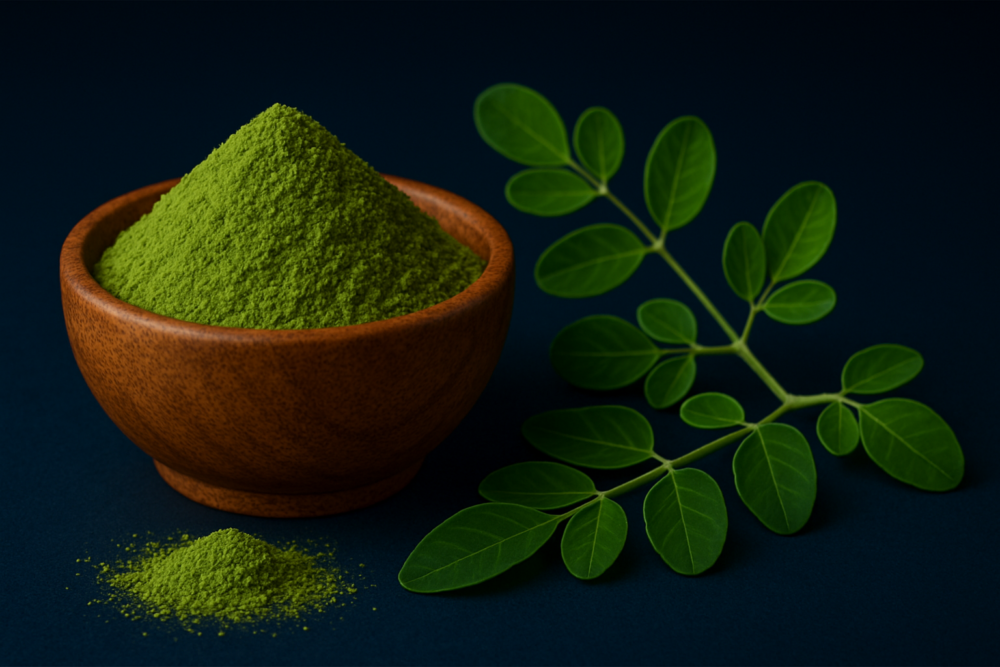
While this golden duo calms inflammation, if there’s one plant that has almost everything your eyes need in a single leaf without needing combinations, it’s moringa. Moringa has seven times more vitamin C than oranges. We’ve already seen how this vitamin protects your lens and makes collagen, but moringa doesn’t stop there. It also has four times more vitamin A than carrots. So you combine the benefits of several foods in one. The antioxidants in moringa have names that sound like medicine: quercetin, chlorogenic acid, kaempferol. But their job is simple. They form an army that protects every cell in your retina. Quercetin specifically protects the blood vessels of the eye, keeping the walls flexible and preventing leaks, and chlorogenic acid lowers eye pressure. It’s natural prevention for those at risk of glaucoma.
And here’s the interesting part. Moringa contains all nine essential amino acids. Your body uses these amino acids to repair damaged tissues, including eye tissue. When you eat moringa regularly, you give your eyes the building blocks to repair themselves. But I need to clarify something important here. Moringa is not a miracle cure that replaces a balanced diet. I’ve seen people take moringa while still eating processed foods and expecting magic. It doesn’t work that way. Moringa is a powerful supplement, not a substitute. It works best when you already eat a variety of fruits and vegetables. It’s the icing on the cake, not the whole cake.
And the zinc in moringa deserves special attention. This mineral is very important for carrying vitamin A from your liver to your eyes. Without zinc, you can eat all the carrots in the world and not improve your night vision. Moringa gives you zinc in the most absorbable form. Plus, zinc protects against macular degeneration. It’s the guardian of your macula in the long term. Fresh moringa leaves are the most nutritious, but hard to find outside tropical areas. Moringa powder is the practical alternative. Choose bright green powder, not brown. Brown color means oxidation and loss of nutrients. Start with half a teaspoon a day. Some people experience a laxative effect if they take too much at once. Your body needs to adjust. The taste of moringa is earthy, like concentrated spinach. Not everyone likes it, but there are ways to hide it. Mix it with apple juice or in a smoothie with banana and spinach. The natural sweetness of fruits balances the green taste. You can also add it to soups at the end of cooking. Too much heat destroys some nutrients, so add it when you turn off the heat.
🌱Healthy Habits for Better Vision

Now, all these foods work best when you combine them with habits that protect your vision. And the first one is so simple it seems silly, but it can save your eyes from digital strain. The 20-20-20 rule is your savior if you spend hours in front of screens. Every 20 minutes, look at something 20 feet away (about 6 meters) for 20 seconds. Your eyes have muscles that focus up close and far away. When you look at a screen for hours, these muscles get stuck in one position. It’s like keeping your arm bent all day. The 20-20-20 rule relaxes those muscles and prevents eye strain.
But there’s more. When you look at screens, you blink half as much, and without enough blinking, your eyes get dry and irritated. During those 20 seconds of rest, blink consciously several times. Close your eyes tightly and open them slowly. It’s like giving them a refreshing bath. You can set an alarm every 20 minutes until it becomes a habit. Next, natural light is free medicine for your eyes. Spending at least an hour a day outdoors reduces the risk of nearsightedness by 40%. Sunlight stimulates dopamine production in your retina, which controls the growth of the eyeball. Without enough natural light, the eye grows too long, and you develop nearsightedness. You don’t need to look at the sun, just be outside, walk, read in the park, have coffee on the patio. Your retina picks up ambient light.
One enemy of vision is tobacco. Every cigarette reduces blood flow to your retina. The chemicals in smoke directly attack your macula. Smokers have three times the risk of cataracts and four times the risk of macular degeneration. If you smoke, every protective nutrient you eat is fighting against the damage from tobacco. Also, tobacco smoke destroys vitamin C in your body. Remember that this vitamin keeps your lens clear. Smokers need twice as much vitamin C just to make up for it, and it’s not enough. The free radicals from smoke cause damage that no antioxidant can completely stop. The only real solution is to not smoke.
And a question I often get: who should get their eyes checked? You should know that eye exams are your early warning system. Many eye diseases don’t show symptoms until the damage is permanent. Glaucoma, for example, steals your peripheral vision so slowly that you don’t notice it. And by the time it affects your central vision, you’ve lost 90% of the optic nerve. But an annual exam can often catch it early when treatment still works. Don’t wait until you have problems. If you’re over 50, get checked every year. And if you have diabetes, high blood pressure, or a family history of eye problems, start earlier. A complete exam includes eye pressure, fundus exam, and visual field test. It’s 30 minutes a year that can save you from blindness.
✅Key Takeaways:
- Avocado: Contains lutein and zeaxanthin, which form a natural shield against blue light. Its healthy fats help absorb these nutrients.
- Guava: A powerhouse of vitamin C, crucial for keeping the eye’s lens clear and preventing cataracts. It also aids in collagen production for eye structure.
- Carrots: Rich in beta-carotene, which converts to vitamin A, essential for night vision and corneal health. Best absorbed with a little fat.
- Walnuts: Provide plant-based omega-3s, vitamin E (gamma-tocopherol), and melatonin, which help repair eye membranes, reduce inflammation, and protect the retina during sleep.
- Dark Leafy Greens (Spinach, Kale): Top sources of lutein and zeaxanthin, acting as a natural filter against harmful blue light. Need fat for proper absorption.
- Turmeric with Black Pepper: Curcumin in turmeric is a powerful anti-inflammatory for eye conditions, and piperine in black pepper boosts its absorption significantly.
- Moringa: A nutrient-dense plant with high levels of vitamins A and C, essential amino acids, and zinc, offering broad protection for eye health.
- Avoid Processed Juices and Ultra-Processed Foods: These are high in sugar, unhealthy fats, and sodium, which can damage delicate eye blood vessels and lead to long-term vision problems.
- Practice the 20-20-20 Rule: Every 20 minutes, look at something 20 feet away for 20 seconds to reduce eye strain from screens.
- Get Natural Light: Spending time outdoors helps prevent nearsightedness.
- Quit Smoking: Tobacco severely damages eye health and increases the risk of cataracts and macular degeneration.
- Regular Eye Exams: Crucial for early detection of eye diseases before irreversible damage occurs.
Ultimately, the most powerful thing about all this is that it’s in your hands. You don’t need expensive prescriptions or complicated treatments to start. Your next trip to the market can be the beginning of a new relationship with your eye health. And now that you know which foods are allies and which are enemies, every choice counts. Remember that your eyes work for you every second of the day. They deserve you to work a little for them. With this knowledge and a bit of consistency, you can keep your window to the world clear and bright for many more years.