
Are you loading up your meals with protein shakes, bars, and snacks because everyone says you need more? If you think more protein equals better health and slimmer waistlines, you’re not alone. But is chasing high-protein everything really the best move for your health? Let’s break down exactly what the science says about protein intake—and what Big Food doesn’t want you to notice! (Based on the insights of Dr. Brad Stanfield)
Key Takeaways
- Current protein guidelines may be outdated. Most people benefit from a bit more protein, but going overboard isn’t healthier.
- The benefits of protein top out at a certain point. More isn’t always better for muscle gains or weight loss.
- Older adults have unique protein needs. Yet, the evidence for very high protein diets in this group is weaker than you might think.
- Extremely high protein diets may carry risks, especially for kidneys and cancer.
- Not all protein is equal: plant vs animal sources matter.
- Big Food is pushing ‘high-protein’ ultra-processed products that aren’t always healthy.
- Whole food sources of protein are best for most people.
1. The Current Protein Recommendation Is Probably Too Low
Most official guidelines suggest adults should aim for about 0.8 grams of protein per kilogram of body weight each day. That’s roughly 56 grams for a 70 kg (154 lb) adult. Many nutrition experts now say this recommendation is too low, especially if you want to build or keep muscle as you age, or if you’re active. In fact, leading voices now encourage aiming closer to 1.2–1.6 grams per kilogram—or about 50% more than old-school recommendations.
2. The Real Benefits of Protein Max Out at a Certain Point
Why add more protein than the official advice? Protein helps build and preserve muscle, leaves you feeling full, and burns more calories during digestion compared to carbs or fat. However, piling on tons of extra protein doesn’t equal tons more benefit. Major studies show that gains top out around 1.3–1.6 g per kilogram per day. Eat more than that, and you’re not likely to see extra muscle or additional weight loss—you’re just making expensive pee.
3. Older Adults: Yes, You Need More (But Not Too Much!)
If you’re 65 or older, it’s true: your body holds on to muscle mass less efficiently. International guidelines often recommend up to 1.0–1.2 g per kilogram (a bit higher than young adults). But when researchers tested results in real people, even adding more protein didn’t always lead to more muscle or strength. Why? Many older adults in these studies were already eating enough protein, so pumping in even more didn’t make a difference. The sweet spot seems to be about 1.2 g per kilogram per day, not the sky-high levels pushed by some influencers.
4. Can Too Much Protein Harm Your Kidneys or Raise Cancer Risk?
High-protein diets have worried doctors for years, mostly because of potential stress on the kidneys—especially if you already have any kind of kidney problem. When you eat protein, your kidneys work harder to filter out waste products. If you have kidney disease (even mild), talk to your doctor before raising your intake.
What about cancer? Some studies find higher rates of cancer in folks under age 65 eating large amounts of animal protein, possibly because of how excess protein triggers certain cell growth signals (like the mTOR pathway). Interestingly, plant protein doesn’t carry the same risk. And after age 65, getting enough protein actually helps protect against cancer and weight loss. So, balance and source matter.
5. Animal vs. Plant Protein: There’s a Difference
It’s not just how much protein you eat—it’s where it comes from. Animal-based sources (beef, dairy, eggs) tend to spike growth pathways linked to some diseases if overdone. Plant-based proteins (beans, peas, lentils, nuts) have consistently shown safer profiles, with added fiber and micronutrients. If you love meat or dairy, that’s okay—just keep portions sensible and mix in plant sources whenever you can.
6. Watch Out for Big Food’s ‘High-Protein’ Ultra-Processed Snacks
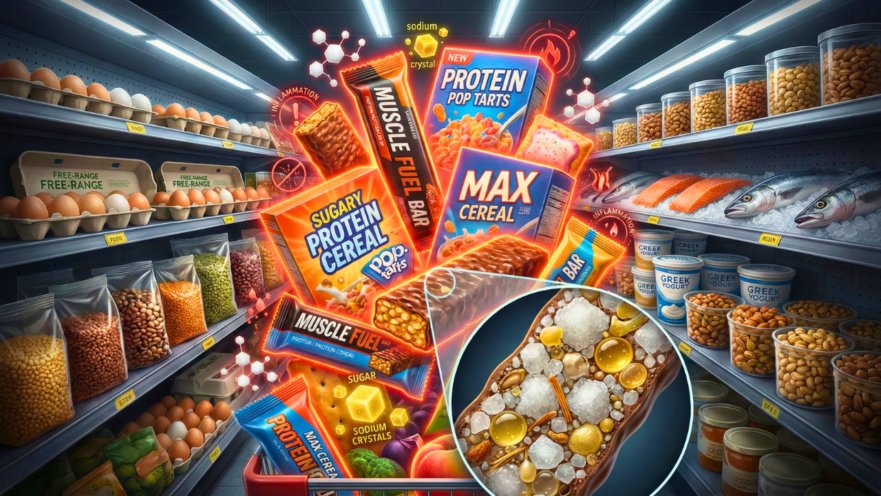
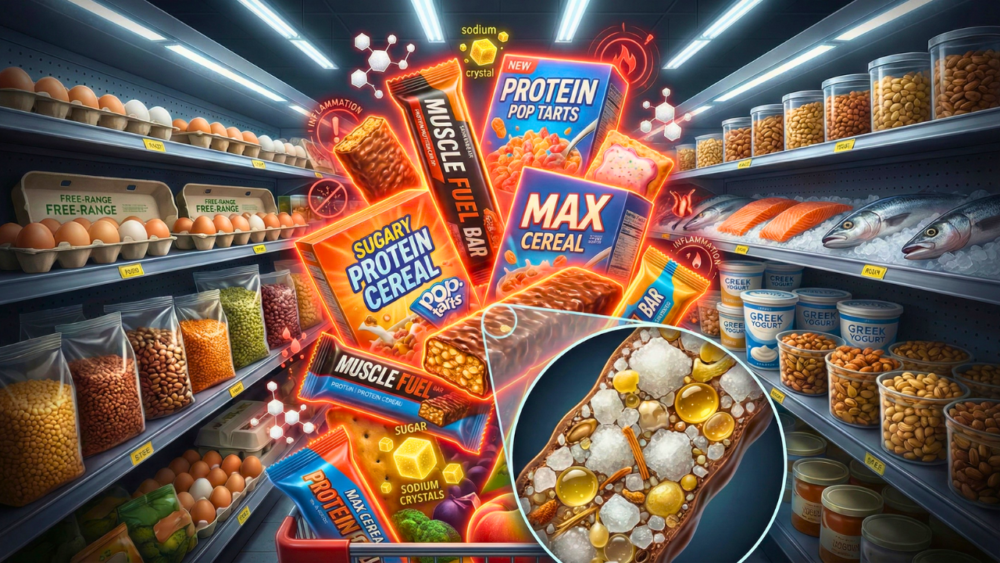
Walk down any grocery aisle, and you’ll see protein labels slapped onto everything from candy bars to cereals. But don’t be fooled! A recent study of supermarket “high-protein” products found over 90% were less healthy than basic alternatives. Most are loaded with sugar, fat, sodium, or artificial sweeteners. These processed snacks don’t just avoid adding nutrition—they often subtract it, leaving out fiber and plant nutrients your body craves.
Let’s look at a few eye-openers:
- Protein candy bars: More protein than the original, but still high in saturated fat and sodium.
- Protein cereals: A modest protein boost but often high in sugar.
- Protein sweet rolls: Sometimes no added sugar, but with loads of sugar substitutes, sodium, and almost no real food inside.
7. Whole Food Protein Beats Supplements (Almost) Every Time
You don’t need expensive powders or bars to hit your protein targets—real food gets the job done better. A handful of almonds (about 6 grams of protein and almost 4 grams of fiber) brings a mix of nutrients, not just isolated protein. Beans, lentils, chickpeas, tofu, eggs, fish, yogurt—these are your best friends for healthy protein.
If you do use protein powder, try to make it an addition, not a replacement for meals made from real, whole foods. Powders can help for convenience or specific athletic needs, but you’ll probably miss out on important fibers and plant chemicals if you make them your main source.
How Much Protein Should You Really Eat?
The best advice for most healthy adults: 1.2 grams of protein per kilogram of ideal body weight per day is a smart target. (If you want a quick calculation, use an online ideal body weight calculator based on your height, then multiply that number by 1.2 for your daily grams goal.)
If you have kidney disease, consult your doctor first—in some cases, lower intakes are safer, but in others, moderate higher intakes are still beneficial.
Skip Protein Hype—Prioritize Nutrition!
At the end of the day, don’t let Big Food’s marketing tricks steer you toward ultra-processed, high-protein snacks just because the label looks healthy. Your body—and your long-term health—will thank you for sourcing your protein from simple, natural foods like beans, nuts, dairy, fish, and lean meats, not mystery bars.
Remember: Protein is important—but smart sourcing and moderation are even more powerful. Not every trendy product on the shelf is there to help you; sometimes, it’s just there to help someone else’s bottom line!
For healthier eating and stronger bodies, stick to whole foods and let protein work for you—not the processed snack industry!
Source: Dr. Brad Stanfield