
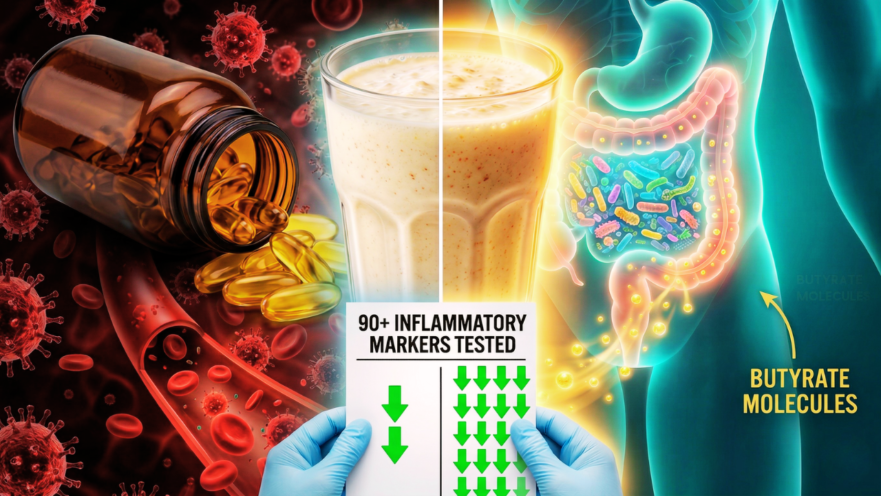
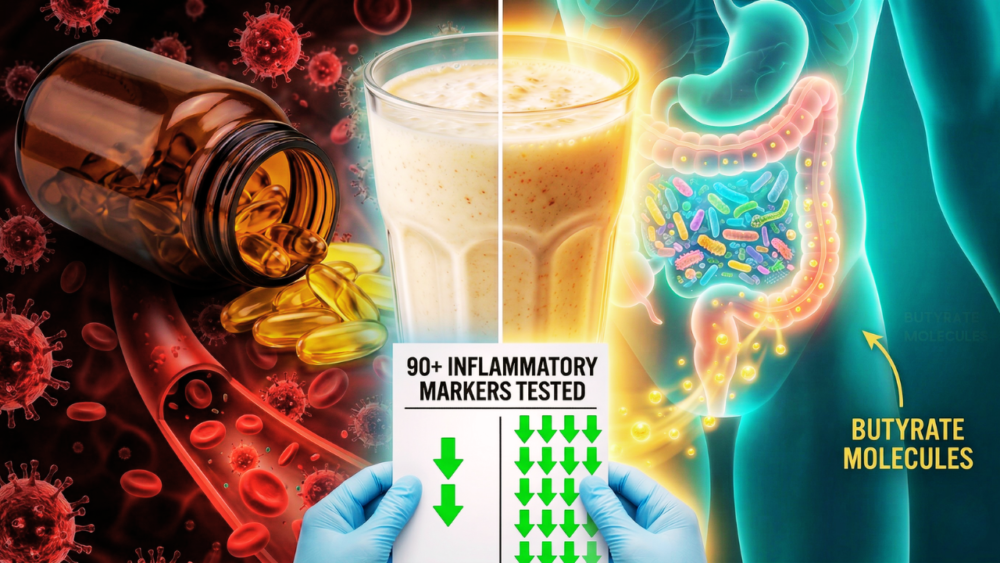
Everyone talks about omega-3 like it’s the final boss of inflammation. Fish oil versus algae, capsules versus liquids, people stacking grams per day. And yes, omega-3 absolutely does reduce inflammation. That part is not controversial anymore. But what if I told you there’s something even more powerful, and it’s probably not what you think? A recent study has revealed something truly remarkable: a simple shake, made from just two types of ingredients, reduced more inflammatory markers than omega-3 did. And not by a little, but by a lot.
The wildest part is that this wasn’t some exotic lab compound or a new pharmaceutical drug. It was essentially a fermented drink plus fiber—something you can easily make in your own kitchen. Today, I’m going to walk you through what this study found, why the results are such a big deal, who stands to benefit the most, and exactly how you can replicate this powerful anti-inflammatory drink at home using simple, everyday ingredients. A quick heads-up: this isn’t an anti-omega-3 article. I still believe omega-3 is very useful, but this study uncovers something deeper about where inflammation really comes from for many people. Once you see it, you can’t unsee it. (Based on the insights of Felix harder)
Key Takeaways
- A Powerful Alternative: A new human study found that a symbiotic shake (probiotic kefir + prebiotic fiber) was significantly more effective at reducing a wide range of inflammatory markers compared to a standard dose of omega-3.
- Gut-First Approach: The shake’s power comes from its ability to heal the gut. It works by improving the gut microbiome and strengthening the gut lining, addressing a root cause of chronic inflammation for many individuals.
- The Butyrate Boost: The combination of kefir and fiber dramatically increases the body’s production of butyrate, a short-chain fatty acid that acts as a potent anti-inflammatory signal, calming the immune system from the inside out.
- Easy to Make at Home: You can easily replicate this drink using plain kefir and a diverse mix of prebiotic fibers. The key is to start with a small amount and increase your intake gradually to allow your gut to adapt.
- Better Together: This isn’t an either/or situation. Combining this gut-healing shake with your omega-3 supplement can create a powerful, two-pronged strategy to fight inflammation from both the top down and the gut up.
1. The Groundbreaking Study: Putting Inflammation Under the Microscope
Let’s break down this study to understand why it’s such a breakthrough. Researchers conducted a six-week intervention trial with real people, taking blood tests before and after to measure changes. Instead of just looking at one or two common inflammatory markers like C-reactive protein (CRP), they used a sophisticated panel that measured over 90 different inflammatory proteins at once. This is crucial because inflammation isn’t a single entity; it’s a complex network of signals and responses happening simultaneously.
The participants were divided into four groups:
- The Omega-3 Group: Took a standard dose of around 500 mg of omega-3 per day.
- The Fiber Group: Took inulin, a single type of prebiotic fiber.
- The Symbiotic Group: Drank a daily shake containing a fermented kefir drink (probiotic) plus a mix of different prebiotic fibers.
- The Control Group: Took nothing, serving as the baseline for comparison.
After six weeks, the results were clear. While all three interventions showed some reduction in inflammation compared to the control group, one stood out as the clear winner.
2. The Surprising Results: Why the Shake Won
As expected, the omega-3 group saw a reduction in a small number of classic inflammatory markers, like TNF-alpha. This is what omega-3 is known for, and the results confirmed its solid, predictable benefits. The group taking only fiber saw a similar, helpful-but-limited effect.
But the symbiotic shake did something entirely different. It didn’t just lower a few markers; it lowered a much wider range of inflammatory proteins. Most importantly, it specifically reduced immune signaling molecules that are directly linked to inflammation in the gut lining, such as IL-6. This wasn’t just a general, systemic dampening of inflammation. The data suggested that the shake was calming inflammation directly at its source: the gut. The effect sizes were not subtle or borderline; they were clearly and significantly stronger than those seen in the omega-3 group across the board.
3. The Secret Weapon: It’s All About Butyrate
So, what was the shake’s secret? The researchers dug deeper and measured the levels of short-chain fatty acids (SCFAs) in the participants’ blood. SCFAs are beneficial compounds that your gut bacteria produce when they ferment fiber. One of the most important of these is butyrate.
Here’s where it gets fascinating. After the six-week shake intervention, participants’ butyrate levels shot up. The researchers found a direct correlation: the higher a person’s butyrate levels went, the more their levels of the inflammatory marker IL-6 went down. This is a huge deal because IL-6 is one of the main drivers of the chronic, low-grade inflammation that underlies so many modern health issues, from fatigue and brain fog to metabolic problems and even autoimmune conditions.
This shows that the shake wasn’t just suppressing inflammation like a painkiller. It was fundamentally changing the gut environment, empowering the body to produce its own powerful anti-inflammatory signals. It was fixing the problem at a much deeper level.
4. Who Needs This Most? Identifying Gut-Driven Inflammation
This discovery is particularly important for a huge number of people who are dealing with what I call “gut-driven inflammation.” This group includes not only those with obvious digestive symptoms like bloating, food sensitivities, IBS, reflux, or constipation but also many people who don’t have gut symptoms at all.
If you struggle with persistent fatigue, brain fog, unexplained joint pain, low mood, or skin issues like eczema or acne, there’s a strong chance your gut is involved. Your gut is home to the largest immune system in your body. When the gut lining becomes irritated or “leaky,” or the microbiome is out of balance, your gut’s immune system goes on high alert. It starts pumping out inflammatory cytokines that leak into your bloodstream and travel throughout your body, causing systemic inflammation.
Omega-3 can help dampen that inflammatory response, but it doesn’t fix the leaky barrier or the imbalanced microbiome. The symbiotic shake, on the other hand, seems to work directly on that underlying issue. It feeds beneficial bacteria, increases microbial diversity, and boosts the production of gut-healing butyrate. That’s likely why its effects were so much broader and more powerful.
5. How to Make the Anti-Inflammatory Shake at Home
Now for the most practical part: what was in the shake and how can you make it? The formula was simple.
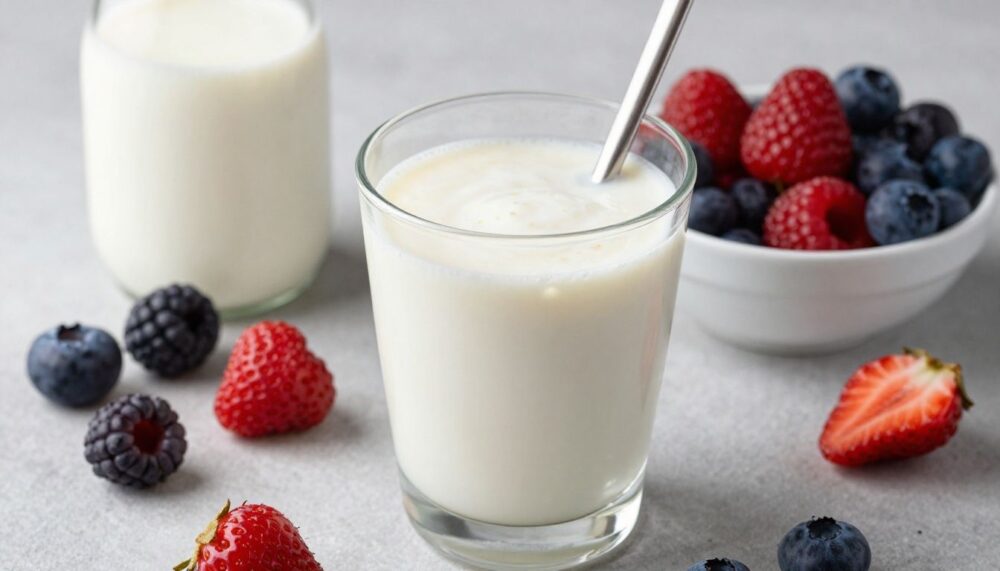
- Component 1: The Probiotic Base. The study used 170 ml (about 3/4 cup) of goat milk kefir, which contained 27 different strains of live bacteria. The key here is complexity. A real fermented food provides a diverse ecosystem of microbes, not just one or two strains from a capsule. For your home version, aim for 150-200 ml (a small glass) of plain, unsweetened kefir. Goat milk is great if you tolerate it, but cow milk kefir is also excellent. If you’re sensitive to dairy, you can try water kefir or coconut kefir.
- Component 2: The Prebiotic Fiber Blend. The study used a commercial blend of 18 different fibers. The principle is diversity—different fibers feed different types of beneficial bacteria. You don’t need a fancy product to achieve this. A simple and effective home version could be:
- 1/2 teaspoon of inulin powder
- 1/2 teaspoon of partially hydrolyzed guar gum (PHGG) or acacia fiber
- 1/2 teaspoon of resistant starch (from unmodified potato starch or green banana flour)
- 1/2 teaspoon of psyllium husk
This mix gives you four very different types of fiber to nourish a wide range of microbes. You can also add whole-food fibers like a tablespoon of ground flax seeds or a handful of antioxidant-rich berries. Simply blend everything with your kefir, adding a little water or ice to get the right consistency.
6. Important Tips for Success
Before you start, keep these critical points in mind.
- Start Low, Go Slow: More is not better, especially at the beginning. If you suddenly dump a large amount of fiber into a gut that isn’t used to it, you’ll likely experience gas, bloating, and cramping. Start with just a quarter or half of the recommended fiber amount and slowly build up over a couple of weeks. Let your microbiome adapt.
- Consistency is Crucial: This is not a one-time fix. The study participants drank the shake daily for six weeks. That’s the kind of consistency needed to create a real shift in your gut ecosystem and lower inflammation. Make it a daily habit.
- Manage Your Expectations: This is not a stimulant like caffeine. The benefits are cumulative and often subtle at first. You might notice better digestion, more stable energy, clearer thinking, or less joint stiffness over several weeks.
7. Don’t Ditch Your Omega-3 Just Yet
Finally, it’s vital to understand that this study doesn’t mean omega-3 is useless. It still reduced inflammation. This is not an either/or situation. In fact, for many people, the ultimate strategy is to combine both approaches.
Think of it this way: omega-3 calms inflammation from the top down by directly inhibiting inflammatory pathways. The symbiotic shake works from the gut up by fixing the source of the inflammation. Using both gives you a comprehensive, powerful combination that addresses the problem from two different angles. It’s a synergistic approach for long-term health.
Conclusion
The biggest takeaway from this research is not that one nutrient is “better” than another, but that inflammation is often a systemic problem that starts in the gut. Instead of just trying to suppress the symptoms, we can achieve far greater results by supporting the core system that regulates our immunity and inflammation. By feeding your gut ecosystem with simple, powerful foods like kefir and fiber, you empower your body to do the healing work for you. This study shows that sometimes, the most profound solutions are also the simplest.
Source: Felix harder