
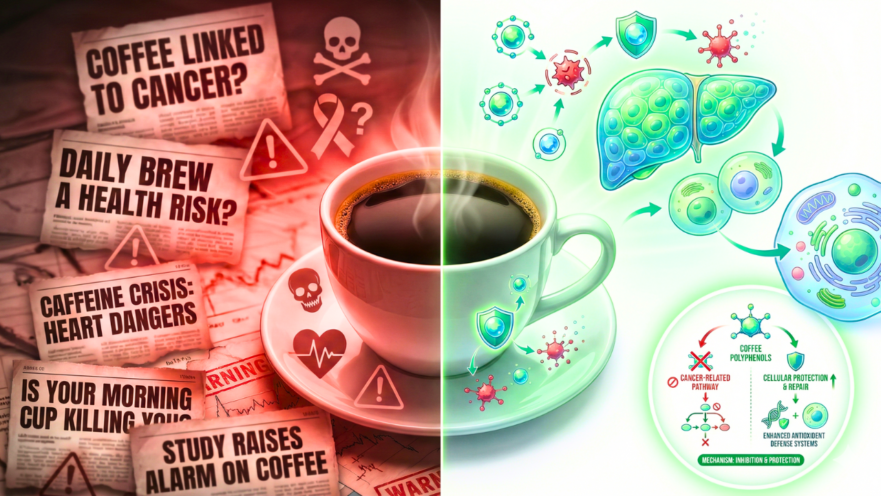
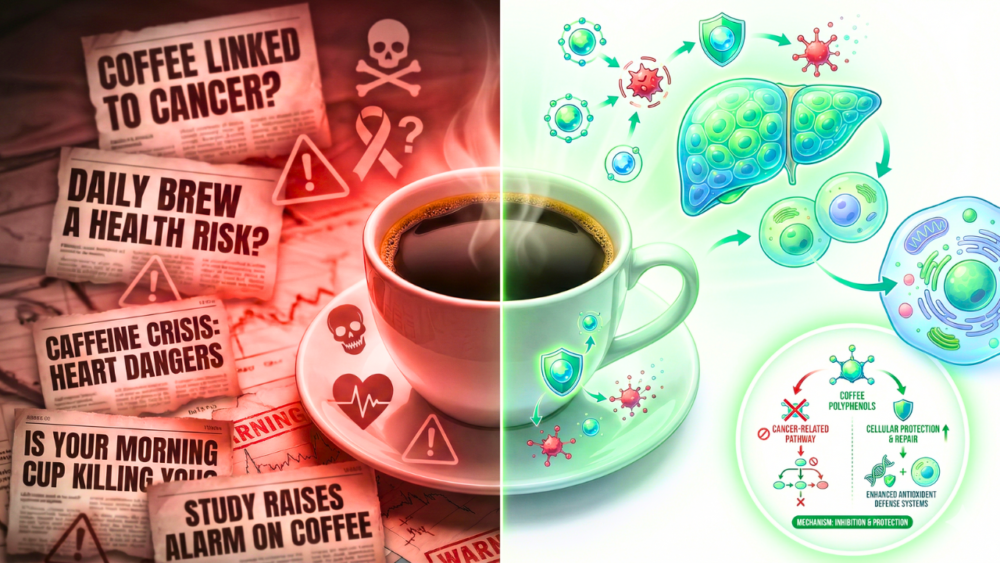
Imagine this: You’re sitting down to your morning coffee, newspaper in hand, when a bold headline jumps out at you: “Coffee Consumption Linked to Cancer Risk.” Panic sweeps through the community. Is your daily cup of joe really dangerous? Over the decades, coffee has found itself at the center of numerous alarming health debates—particularly about cancer and heart disease. However, new research turns many of these old beliefs on their head.
In this article, we’ll break down the evolving science and explain what it really means for you, the everyday coffee drinker. Whether you simply love a warm brew or rely on it for your morning boost, let’s set the record straight—with real evidence, not rumors. (Based on the insights of Dr. Brad Stanfield)
Key Takeaways:
- Past warnings about coffee and cancer have been reversed by newer, better studies.
- The brewing method can affect coffee’s impact on cholesterol.
- Moderate coffee consumption may actually protect your heart and lower your risk for some diseases.
- Moderation is vital—too much of a good thing can turn bad.
- What you add to your coffee can alter its health effects.
Let’s dive into the top things you need to know about coffee and your health.
1. Coffee and Cancer: From Panic to Protection
In 1981, panic hit after researchers published findings linking coffee to pancreatic cancer—a highly lethal disease. Headlines everywhere warned readers: “Coffee Might Cause Cancer!” Decades later, repeated large and rigorous studies have shown no causal link between coffee drinking and pancreatic or bladder cancer. In fact, coffee was stripped of its carcinogenic warning. Even more, new research showed coffee might lower the risk of liver and uterine cancers, meaning, for most people, coffee is not only safe, but potentially beneficial!
2. The Heart Health Controversy: Coffee Makes Another Comeback
Heart health has long been a concern with coffee. In 2004, studies suggested coffee could raise blood pressure and contribute to heart disease and strokes. But, modern research paints a different picture.
For most regular coffee drinkers, coffee does NOT increase the long-term risk of high blood pressure. Surprisingly, those who drink three or more cups a day actually saw their risk of chronic high blood pressure decrease.
3. Blood Pressure: Not As Risky As You Think
A single triple espresso can temporarily spike blood pressure in those who rarely drink coffee. But for habitual drinkers, there’s usually no significant rise. Even decaf coffee can cause these brief spikes, so it might not be the caffeine at all! More importantly, repeated large-scale studies have failed to find any long-term risk of developing high blood pressure in people who drink coffee regularly—so you probably don’t need to worry if you’re a daily coffee drinker.
4. Cholesterol and Brewing Methods: Does Coffee Raise Your Bad Cholesterol?
Coffee can impact cholesterol—but it depends on how you brew it. Unfiltered coffee (like French press or Turkish coffee) contains compounds that can raise LDL (“bad”) cholesterol. In contrast, filtered coffee (drip or using paper filters) does not increase LDL cholesterol. So, if you’re concerned about cholesterol, stick to filtered brewing methods.
5. The New Evidence: Coffee Might Protect Your Heart
Far from being a threat, multiple large studies now show that moderate coffee consumption is linked to a lower risk of heart disease, heart failure, and strokes. Even more surprising—coffee drinkers have lower rates of plaque buildup in the arteries and a reduced all-cause mortality rate. That means regular, moderate coffee drinking might help you live longer.
6. Arrhythmias: Is Coffee Dangerous for Heart Rhythm Issues?
You might have heard that coffee could worsen abnormal heart rhythms (like atrial fibrillation) because of its caffeine content. Yet, recent studies found regular coffee drinkers with atrial fibrillation actually had a lower risk of heart attacks, strokes, and even a recurrence of abnormal rhythms. This is a great example of why it’s important to base health advice on real-world research, not old assumptions.
7. Moderation Is Key: How Much Is Too Much?
All these benefits come with one big caveat: too much coffee can still be bad for you. Most research finds the greatest benefits in the range of 2 to 4 cups per day. Drinking more than that might wipe away the positives and start to cause harm. Listen to your body, and remember that moderation is crucial.
8. Additives Matter: Sugar and Cream Can Undo Coffee’s Benefits
Black coffee is naturally low in calories and high in beneficial plant compounds. But once you start adding sugar, syrups, or lots of cream, you may cancel out these benefits—especially if you’re trying to manage your weight or blood sugar.
If you love a little sweetness or richness, try reducing extras gradually or use healthier alternatives. Small changes can make your daily coffee just as satisfying—and much better for you.
9. Timing Is Everything: Coffee and Your Sleep
Caffeine hangs around in your body for hours, even if you feel like it doesn’t affect your sleep. Most experts suggest finishing your coffee within 4 to 5 hours after waking up. Late-day coffee might seem harmless, but it can reduce your sleep quality even if you fall asleep easily.
10. Keep Up-To-Date: New Science, New Guidelines
Just as science changed its view on coffee, it’s also updating advice on things like blood pressure and heart risk. Don’t rely on outdated headlines. The story of coffee’s health effects is a great reminder that medical advice evolves—and it’s always good to check the latest evidence (and talk to your healthcare provider) before making big changes.
Conclusion
So, should you worry about your morning cup of coffee? For most people, there’s no need to panic. With the right brewing method, modest servings, and minimal additives, coffee can be part of a healthy lifestyle. It’s a perfect example of how science can change our understanding—and how enjoying even life’s small pleasures can be good for us when done thoughtfully!
Source: Dr. Brad Stanfield