

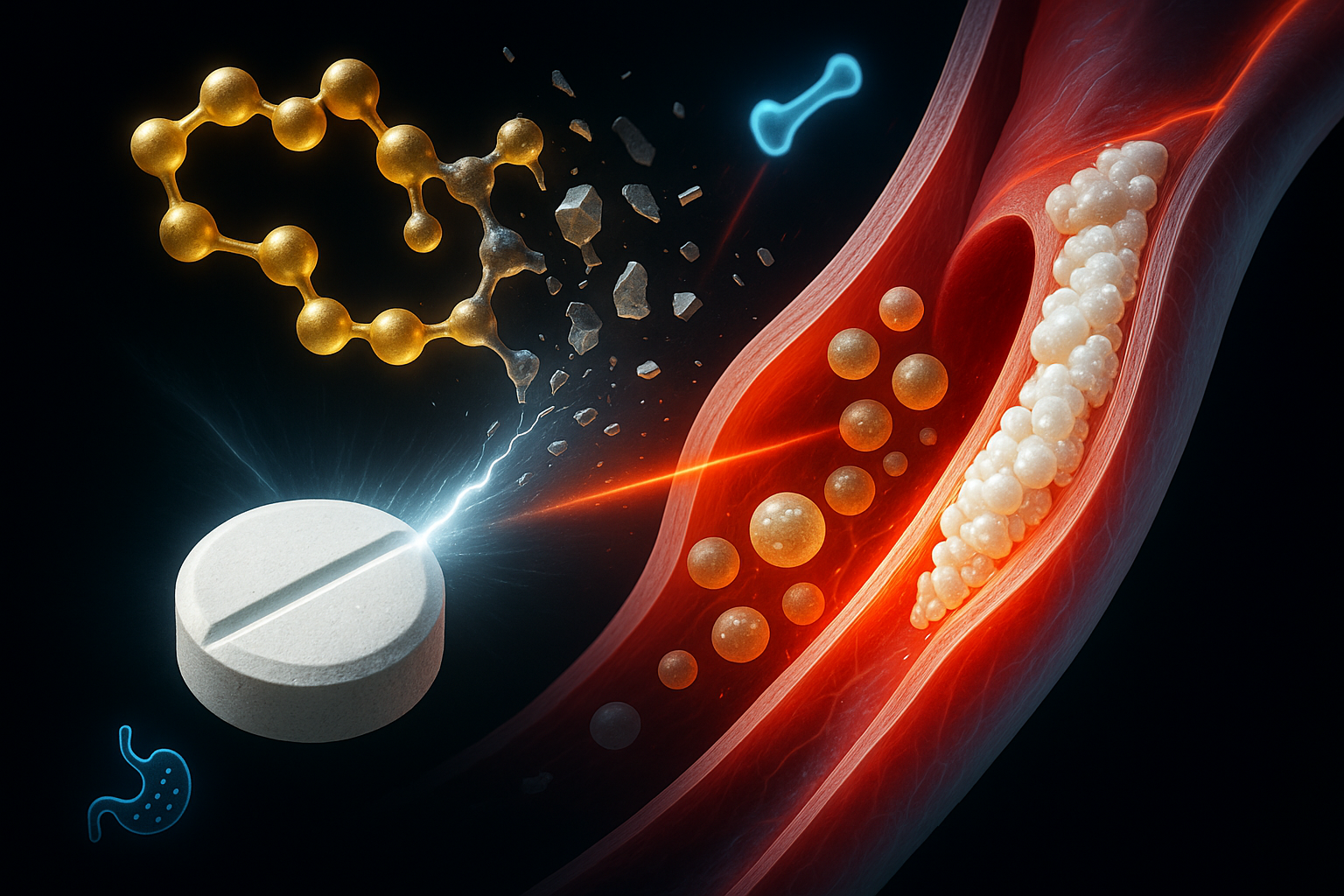
Are you one of the millions of people prescribed statins to lower cholesterol? You might want to read this before refilling your next prescription. While statins are often touted as life-saving drugs, research shows they can silently rob your body of vitamin K₂—a nutrient vital for heart, bone, and vascular health. This hidden side effect can increase your risk for hard arteries and fragile bones, which is the opposite of what most people hope to achieve when managing cholesterol.
Let’s break down how this happens, why it matters, and the practical steps you can take to protect your health—naturally. (Based on the insights of Dr. Jack Wolfson)
Key Takeaways
- Statins disrupt the mevalonate pathway, affecting much more than cholesterol production.
- This pathway is crucial for activating vitamin K₂, which keeps calcium in your bones and out of your arteries.
- Statins may contribute to arterial calcification and bone loss by causing a hidden vitamin K₂ deficiency.
- Gut health and nutrient absorption are also impacted by statins.
- Whole foods and a healthy microbiome are key to restoring vitamin K₂ levels and supporting overall health.
1. The Mevalonate Pathway—Cholesterol and Beyond
Statins work by blocking an enzyme (HMG-CoA reductase) in your liver, which reduces cholesterol production. But this enzyme is part of a much larger metabolic pathway called the mevalonate pathway. This pathway doesn’t just make cholesterol—it’s also responsible for producing isoprenoid molecules. These are essential for activating vital enzymes, including those that let vitamin K₂-dependent proteins work correctly.
When statins block the mevalonate pathway, they often disrupt more than just cholesterol—they can throw off a whole web of biochemical processes, including vitamin K₂ activation.
2. How Statins Sabotage Vitamin K₂ (And Why It Matters)
Vitamin K₂, also known as menaquinone, is critical for activating two proteins:
- Matrix Gla Protein (MGP): Keeps calcium from building up in your arteries.
- Osteocalcin: Helps move calcium into your bones and teeth.
These proteins need vitamin K₂-dependent carboxylation to work. This process relies on cofactors from the mevalonate pathway. By blocking this pathway, statins keep these crucial proteins in an inactive form. The sad result? More calcium winds up stuck in your arteries (calcification), and your bones can lose their strength.
Recent studies even show that statin users can have higher coronary artery calcification scores despite lower cholesterol. So, while you might see your cholesterol numbers drop, the trade-off could be more dangerous for your long-term cardiovascular health (Mori et al., 2016).
3. Double Whammy: Statins Disrupt Your Gut and Nutrient Absorption
Statins don’t just affect your liver. They also mess with your gut microbiome—the trillions of bacteria in your digestive system that help create certain nutrients, including natural vitamin K₂ (menaquinones).
Here’s how:
- Altered Gut Flora: Statins change the balance and function of gut bacteria, which can reduce the amount of vitamin K₂ they produce.
- Bile Acid Metabolism: Statins and other cholesterol drugs impact bile acids,
which are essential for absorbing fat-soluble vitamins like A, D, E, and K.
The result? Statin users can develop silent deficiencies in vitamin K₂ and other important fat-soluble nutrients. Over time, this can contribute to arterial plaque, fragile bones, and even lower energy production at the cellular level.
4. Why Vitamin K₂ Is Critical for Heart and Bone Health
Vitamin K₂ directs calcium into the right places—your bones and teeth—and keeps it out of places it shouldn’t be, like your arteries and kidneys. If you’re taking a statin, supporting your K₂ status becomes even more important for keeping your cardiovascular and bone health on track.
5. Natural Foods Rich in Vitamin K₂
Although your body can make and absorb some vitamin K₂ from your gut bacteria, it’s best to get K₂ from a variety of natural, whole food sources, especially menaquinone-4 (MK-4), which is the form most active in humans.
Top natural sources include:
- Egg yolks and butter from pasture-raised animals
- Grass-fed bison organs, especially liver and pancreas
- Fermented foods, like sauerkraut and certain aged cheeses
- Animal fats from traditionally raised livestock
To maximize absorption, always pair these foods with healthy fats and support good digestion.
6. Support Your Gut for Optimal Vitamin K₂
A healthy microbiome is key to producing and absorbing vitamin K₂. If you’ve been on statins, supporting your gut health with a diverse diet (lots of fiber, fermented foods, and prebiotics) helps promote a robust gut flora that can manufacture and utilize vitamin K₂ efficiently.
Probiotics and regular consumption of fermented foods like yogurt, kefir, natto, and kimchi feed the beneficial bacteria responsible for this process, which is especially important if statins have reduced their numbers.
7. How to Protect Yourself If You Take Statins
If you must take statins, there are steps you can take to minimize their side effects and protect your health:
- Speak with your doctor about the possibility of vitamin K₂ deficiency. You may need monitoring and possibly extra dietary support.
- Eat a nutrient-dense, whole foods diet rich in vitamin K₂, healthy fats, and prebiotic fiber.
- Minimize processed foods to limit inflammation and maintain gut health.
- Consider probiotics to replenish gut bacteria that make vitamin K₂.
- Regularly monitor your calcium, vitamin D, and bone density levels.
- Request alternative therapies or dosages from your healthcare provider if you develop significant side effects.
8. Focus on Cellular Health, Not Just Lab Numbers
Statins may effectively lower cholesterol, but the true goal is not a lower lab reading—it’s optimal cellular and cardiovascular health. Supporting vitamin K₂ activation through diet and lifestyle provides a better chance at true, long-term wellness rather than simply chasing numbers on a blood test.
Conclusion
Being proactive about your vitamin K₂ intake and gut health is essential, especially if you’re using statins. While statins may be necessary for some, they come with unintended consequences that can undermine your hard work to protect your heart and bones. By understanding these hidden side effects and taking steps to counteract them, you empower yourself to make informed decisions and prioritize lasting health.
Remember: Your body knows how to heal—support it naturally.
Sources
- Mori, J. et al. (2016). Statin use and coronary artery calcification: A systematic review and meta-analysis. Atherosclerosis
- Schurgers, L.J., et al. (2013). Statin therapy and vitamin K2 status: A review. Thrombosis and Haemostasis
- Brandenburg, V.M. & Reinartz, S. (2020). The clinical relevance of vitamin K2 supplementation. Nutrients
- Schwalfenberg, G.K. (2017). Vitamins K1 and K2: The emerging group of vitamins required for human health. Journal of Nutrition and Metabolism
- Simes, D.C. et al. (2020). Statins and intestinal microbiota: A comprehensive review. Pharmacological Research