
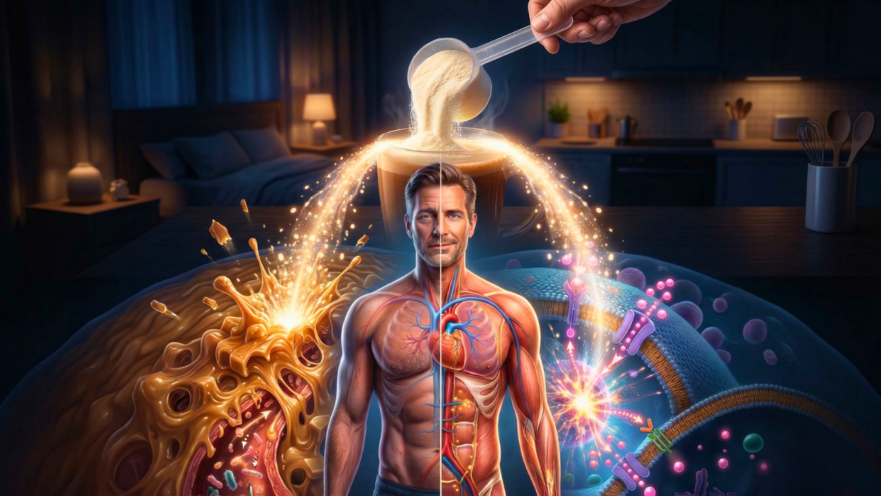
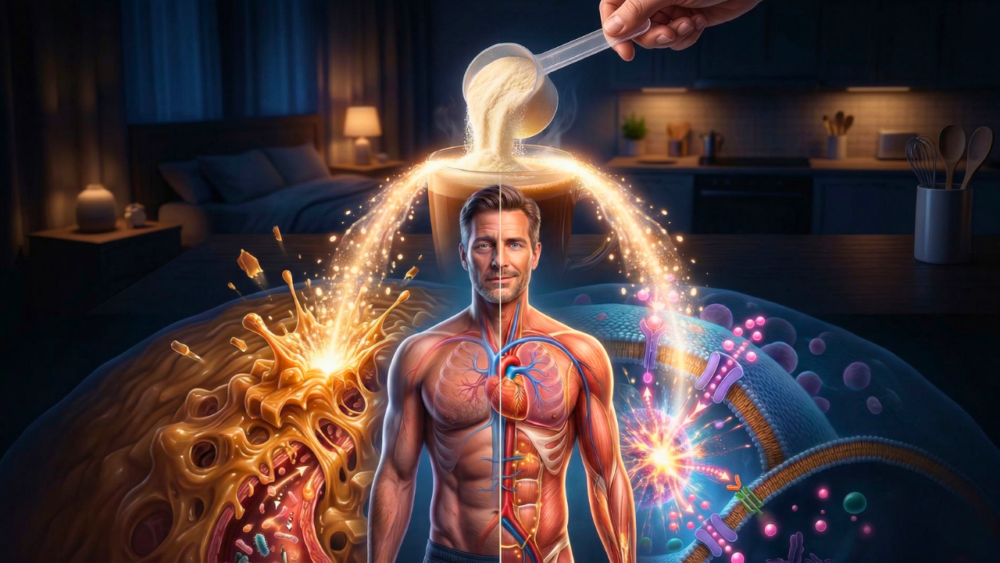
If you’ve ever considered taking collagen, or if you already sprinkle a scoop into your morning coffee, I want you to pay close attention. There is a specific dose that seems to unlock a completely different level of benefits, and it’s not the 5 or 10 grams you typically see. The magic number is 15 grams per day. At this dose, something remarkable happens: collagen stops behaving like a simple skin and joint supplement and starts acting like a powerful metabolic signaling supplement. It directly influences insulin resistance, a condition that a huge portion of the population is dealing with, and perhaps you are, too.
This isn’t just a theory; it’s backed by fascinating research, including a muscle biopsy study that shows exactly what changes inside your muscle tissue at that 15-gram dose. Once you understand this, you’ll see collagen in a new light—less as something for wrinkles and more as a crucial tool for optimizing the way your body manages energy. Many people work out consistently and try to eat right but still struggle with energy crashes, post-meal brain fog, or a high HbA1c reading from their doctor. They feel like their body just isn’t processing food correctly. That’s because insulin resistance isn’t just a hormonal issue; it’s often a structural problem. Your cells become physically resistant to insulin’s message. At the right dose, collagen addresses both the signaling and the structural side of this problem, helping your body finally hear the message it needs to function correctly. (Based on the insights of Thomas Delauer)
Key Takeaways
- The 15-Gram Threshold: Taking 15 grams of collagen daily shifts its function from a structural supplement (for skin and joints) to a metabolic signaling supplement that can significantly impact insulin resistance.
- Two-Pronged Approach: Collagen improves insulin sensitivity from two key angles: inside the cell by enhancing signaling pathways, and outside the cell by improving the structural environment and reducing physical resistance.
- Synergy with Exercise: The metabolic benefits of collagen are most pronounced when taken after resistance training. Exercise opens the door for change, and collagen provides the raw materials to make that change happen.
- Timing is Flexible: While taking it right after a workout is ideal, you can still get powerful benefits by taking it with your first post-workout meal or even in the evening, which adds a bonus benefit for sleep quality due to its high glycine content.
- Fights Glycation: Collagen helps reduce Advanced Glycation End Products (AGEs), which are compounds that stiffen tissues and physically block insulin’s ability to do its job. This “softens” the metabolic landscape, allowing for smoother function.
1. Beyond Skin and Joints: Collagen as a Metabolic Signal
For years, collagen has been marketed primarily for its cosmetic and structural benefits—smoother skin, stronger nails, and healthier joints. While it certainly helps in those areas, this focus has overshadowed its profound metabolic role. The difference lies in the dosage. A small, sprinkled scoop might provide some building blocks for your skin, but it doesn’t reach the critical mass needed to trigger significant metabolic signaling. When you hit 15 grams per day, you provide your body with enough specific amino acids and peptides to do more than just patch up tissues. These molecules start acting like messengers, directly influencing how your cells respond to hormones like insulin.
This is particularly relevant for insulin resistance, a state where your body’s cells don’t respond efficiently to insulin. Think of it like a faulty lock and key. Insulin is the key, trying to unlock the cell to let glucose in for energy, but the lock (the cell’s receptor) is rusty and resistant. Your pancreas has to produce more and more insulin (the key) to force the lock open. This is not a sustainable situation and leads to high blood sugar, fatigue, and a host of other health issues. Collagen, at the 15-gram dose, helps to clean and repair that lock, making the whole system work smoothly again.
2. The Muscle Biopsy Study: What Happens Inside Your Cells
To understand how this works, let’s look at the science. A pivotal study took a group of men and put them on a structured resistance training program. One group was given 15 grams of collagen peptides immediately after their workout, while the other group received a placebo. The researchers then took muscle biopsies to see what was happening on a molecular level. The results were stunning.
The collagen group showed significantly greater AKT phosphorylation. While that sounds complex, what it means is that a crucial step in the insulin signaling cascade was working much better. This pathway, known as the PI3K/AKT pathway, is what tells your muscle cells to respond to insulin and move special transporters (called GLUT4) to the cell surface. These transporters are like gates that open to pull glucose out of your bloodstream and into the muscle. So, the collagen wasn’t just helping the men build more muscle; it was making their existing muscle tissue dramatically better at managing blood sugar. Their muscles became more metabolically flexible, more insulin-responsive, and therefore less insulin-resistant.
3. The Cellular Mechanics: How Collagen Fine-Tunes Your Insulin Response
So, why would a protein famous for skin health activate insulin signaling pathways? The answer lies in its unique composition. When you digest collagen, it breaks down into amino acids and special dipeptides that act as signaling molecules. One of the key players is an amino acid called glycine, which collagen contains in very high amounts.
When you consume 15 grams of collagen, glycine levels in your body rise. More of this glycine is then converted into another amino acid called serine. Serine is a precursor to a compound you may have heard of called phosphatidylserine. This is where it gets interesting. Phosphatidylserine plays a vital role in stabilizing insulin receptors at the cell membrane. A more stable receptor can transmit a cleaner, stronger signal from insulin. Instead of insulin having to “yell” to be heard by a resistant cell, it can communicate in a normal voice. Furthermore, in-vitro research shows that collagen peptides also activate AMPK, a master regulator of metabolism. When AMPK is turned on, your muscles get better at burning fat for fuel, building new mitochondria (your cellular powerhouses), and responding to insulin. This is how collagen acts less like a simple protein and more like a molecular amplifier for the positive adaptations you get from training.
4. It’s Not Just the Cell, It’s the Environment: Tackling Structural Resistance
Insulin resistance isn’t just about what happens inside the cell; the environment around the cell matters just as much. The extracellular matrix, the capillary network, and the overall stiffness of your tissues can physically impede insulin’s ability to move and signal. This is where another fascinating study comes in. This trial looked at adults who took 5 grams of fish-derived collagen for 12 weeks. They found that the collagen group had a significant reduction in both insulin resistance and something called Advanced Glycation End Products (AGEs).
AGEs are harmful compounds that form when sugar molecules attach to proteins or fats. They cause tissues to become stiff and dysfunctional—think of it as your internal tissues becoming caramelized and brittle. These AGEs physically get in the way, interfering with nutrient delivery and blocking insulin’s path. The study found that as AGEs went down, insulin resistance went down in perfect lockstep. By reducing AGEs, collagen was essentially softening the entire metabolic landscape. It was removing the physical, mechanical resistance that was blocking insulin in the first place.
5. The Two-Pronged Attack on Insulin Resistance
When you combine the findings from both the muscle biopsy study and the AGEs study, a clear and powerful picture emerges. Collagen fights insulin resistance from two distinct but complementary angles:
- Inside the Cell: It improves the signaling machinery. Through its glycine and peptide content, it helps stabilize insulin receptors and activates pathways like AMPK, making your cells more receptive and efficient at using glucose.
- Outside the Cell: It improves the structural environment. By reducing glycation (AGEs) and supporting the health of the extracellular matrix, it removes the physical barriers that were preventing insulin from reaching the cell and doing its job.
By addressing both the metabolic resistance and the structural resistance, you create a system where insulin’s message can finally get through loud and clear. You’re not artificially boosting anything; you’re simply lowering the resistance that was blocking your body’s natural processes.
6. Your Action Plan: How and When to Take Collagen for Best Results
So, how do you put this information into practice? If you want to mirror the conditions of the muscle biopsy study for maximum metabolic benefit, the strategy is simple.
- The Gold Standard: Take 15 grams of hydrolyzed collagen peptides immediately after your resistance training workout. This is not a replacement for your whey or plant-based protein shake; it’s a supplement that supports the signaling environment that your protein and training rely on.
- The Flexible Option: If you can’t take it right after a workout (maybe you train fasted or have a long commute), don’t worry. Taking your 15-gram dose with your first real meal after training, even an hour or two later, is still highly effective. You’ll still be within the window where your muscles are primed to use those peptides.
- The Evening Bonus: Another great option is to take your collagen in the evening, especially on days you trained. While absorption might be slightly less than post-workout, this timing comes with a fantastic bonus. The high glycine content in collagen has been shown in studies to significantly improve subjective sleep quality, reduce fatigue, and promote mental clarity the next morning. This allows you to support your metabolic health and get a better night’s rest at the same time.
Conclusion
The key takeaway is that 15 grams of collagen is a powerful dose that can fundamentally change how your body manages energy. It’s about consistently providing your body with the structural and signaling support it needs to combat insulin resistance. Whether you take it after a workout or before bed, hitting that 15-gram mark is what unlocks its potential as a true metabolic tool. By addressing both the cellular machinery and the physical environment, you give your body a comprehensive advantage in the journey toward better metabolic health.
Source: Thomas Delauer