
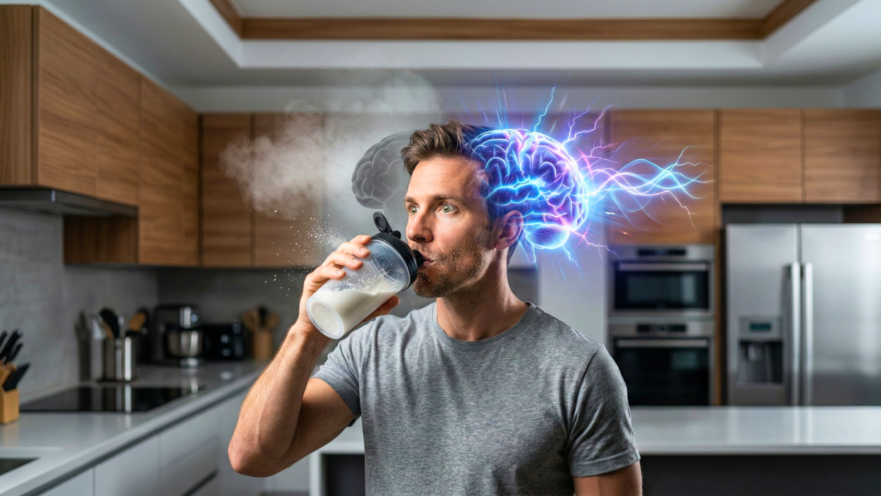
What if I told you that three widely available supplements could dramatically enhance your brain function, protect you from cognitive decline, and give you more energy than you’ve had in years? It might sound too good to be true, but the science is becoming incredibly clear. While a healthy diet and lifestyle are the foundation of good health, certain supplements can act as powerful tools to upgrade your brain’s performance and resilience. You’ve probably heard of them, but you might be using them incorrectly or underestimating their true potential.
In this article, we’re going to take a deep dive into three game-changing supplements: Omega-3 fatty acids, Vitamin D, and Creatine. We’ll explore not just what they do, but how to choose the right ones, how to take them for maximum benefit, and why they are essential for anyone serious about their cognitive health. Get ready to rethink everything you thought you knew about supplements. (Based on the insights of neurophysiologist and cognitive performance expert, Louisa Nicola)
Key Takeaways
- Omega-3: The quality and storage of your omega-3 supplement are critical. Most are likely rancid. Store them in the fridge to preserve their powerful anti-inflammatory benefits for your brain.
- Vitamin D: This is more than just a vitamin; it’s a crucial hormone for your brain. Deficiency is strongly linked to an increased risk of dementia, while optimal levels can significantly lower your risk of Alzheimer’s.
- Creatine: This is arguably the most underrated brain supplement. It’s a safe, cheap, and incredibly effective molecule for boosting cellular energy, fighting brain fog, protecting against brain injury, and even mitigating the effects of stress and sleep deprivation.
1. Omega-3: The Brain’s Essential Fat (And Why You’re Probably Taking It Wrong)
Your brain is about 60% fat, and a huge portion of that fat is an omega-3 fatty acid called DHA. Think of omega-3s as the essential oil that keeps your brain’s machinery running smoothly. They are critical for the fluidity of your cell membranes, allowing your neurons to communicate effectively through synapses. This process is the very basis of thought, memory, and learning. Furthermore, omega-3s have massive anti-inflammatory effects, comparable to an NSAID but without the side effects. Chronic inflammation is a key driver of brain aging and neurodegenerative diseases, and omega-3s are your first line of defense.
Here’s the problem: most omega-3 supplements on the shelf are useless, or worse, harmful. A shocking study found that up to 95% of popular omega-3 supplements exceeded normal oxidation levels. This means the oil inside the capsules has gone rancid. You wouldn’t cook with rancid oil, so why would you feed it to your brain? To ensure you’re getting the benefits, you need to be selective. First, look for a highly credible, NSF-certified brand. This third-party certification ensures that what’s on the label is in the capsule and that it meets strict standards for purity and oxidation. Second, and this is a tip almost nobody talks about, you must treat your omega-3s like you treat high-quality olive oil. The moment you buy them, put them in the fridge. Heat and light are the enemies of these delicate fats. Storing them in a cool, dark place prevents them from becoming rancid and preserves their brain-boosting power.
2. Vitamin D: The Sunshine Vitamin for a Sharper Mind
We often associate Vitamin D with bone health, but its role in the brain is just as critical. Your brain is filled with Vitamin D receptors, especially in areas vital for memory and cognition, like the hippocampus. Think of Vitamin D as a signaling molecule that helps regulate brain function and protect neurons.
The evidence linking Vitamin D to cognitive health is staggering. One fascinating study looked at female centenarians—women who lived to be 100 years old. The ones who had preserved their cognitive function and avoided Alzheimer’s disease consistently had high levels of Vitamin D. The statistics are stark: being Vitamin D deficient can increase your risk of all-cause dementia by a staggering 40%. On the flip side, maintaining a high level of Vitamin D (around 60 nanograms per deciliter in your blood) can lower your risk of developing Alzheimer’s disease by as much as 80%. This isn’t a minor tweak; it’s a massive protective effect. Given that a large portion of the population is deficient, getting your levels checked and supplementing accordingly is one of the most impactful steps you can take for your long-term brain health.
3. Creatine: The Ultimate Brain Fuel You’re Not Using
Now, let’s talk about the most exciting, most widely studied, and perhaps most misunderstood supplement on the market: creatine. For years, it’s been pigeonholed as a supplement for bodybuilders, but its benefits for the brain are nothing short of phenomenal. It’s cheap, effective, and safe for almost everyone, regardless of age, gender, or fitness level.
First, let’s bust the two biggest myths that scare people away. The first is kidney damage. You may have heard that creatine raises creatinine levels, a marker for kidney function. This is true, but it’s not a sign of damage. Creatinine is a byproduct of muscle metabolism; if you have more muscle or are taking creatine, your levels will naturally be higher. A much more accurate marker of kidney function is a test called cystatin C. If you’re concerned, ask your doctor for this specific test. The second myth is that it causes hair loss, which is not supported by robust scientific evidence.
So, what does creatine do? Its primary job is to help your cells recycle energy in the form of ATP. Your brain is an energy-hungry organ, and when it’s under stress—whether from a concussion, a poor night’s sleep, or just the demands of modern life—it can enter an energy crisis. This is where you experience brain fog, low energy, and poor cognitive function. Creatine acts as an energy reserve, allowing your brain to function at a high level even under stress. Studies have shown that high doses of creatine (around 20-30 grams a day) can be neuroprotective, helping to shield your brain from the damage of a concussion or even a stroke.
In fact, research shows you can essentially reverse the negative cognitive effects of sleep deprivation with high-dose creatine (15-20 grams per day). A groundbreaking pilot study on Alzheimer’s patients—whose brains are in a severe energetic crisis—found that 20 grams of creatine per day not only helped preserve their cognitive function but also gave them more physical energy. Recent studies even point to anti-cancer effects, with higher dietary creatine intake associated with a lower risk of cancer. It’s also being explored for its ability to improve mood and cognition in menopausal women.
For brain benefits, the old standard of 5 grams per day isn’t enough. That dose primarily saturates your muscles, leaving little for your brain. To truly fuel your brain, you need to think in the 10-20 gram range, which you can split into smaller doses throughout the day to avoid any potential stomach upset. When buying creatine, look for two things: NSF certification for purity and the word “Creapure” on the label. Creapure is the gold standard, a gritty, pure form of creatine monohydrate from Germany. Many other brands add fillers to make the powder mix better, but pure is always best.
Conclusion
Navigating the world of supplements can be confusing, but focusing on these three powerhouses—Omega-3, Vitamin D, and Creatine—is a simple and profoundly effective strategy for enhancing your brain health. By choosing high-quality products and using them correctly, you are providing your brain with the fundamental building blocks and fuel it needs to thrive. You’re not just fighting brain fog and fatigue; you’re investing in long-term cognitive resilience, protecting your memory, and unlocking a higher level of mental and physical energy. Take control of your health and give your brain the support it deserves.
Source: Louisa Nicola