
What if I told you that you could lower your blood pressure in the time it takes to brush your teeth? It sounds almost too good to be true, but what if you could do it without any pills, fancy equipment, or drastic lifestyle changes? As a physician, I see patients every day who are struggling with high blood pressure, and they are often surprised to learn that they have immense power to influence their numbers through simple, targeted actions. These aren’t just old wives’ tales; they are scientifically-backed techniques that can provide immediate and meaningful results.
High blood pressure, or hypertension, is often called the “silent killer” because it typically has no symptoms. It’s the force of your blood pushing against the walls of your arteries. We measure it with two numbers: the top number, or systolic pressure, measures the pressure when your heart beats, and the bottom number, or diastolic pressure, measures the pressure when your heart rests between beats. While many factors contribute to high blood pressure, one of the biggest culprits in our modern world is stress. The techniques we’re about to discuss are incredibly effective because they directly combat your body’s stress response. You are about to learn three proven strategies to help you relax your nervous system, dilate your blood vessels, and instantly lower your blood pressure. (Based on the insights of Dr. Mitch Rice)
Key Takeaways
- Auricular Acupressure: A simple 90-second ear massage can stimulate the vagus nerve, a critical component of your body’s relaxation system, to quickly lower blood pressure.
- Guided Body Scan: By using a 60-second mindfulness exercise, you can consciously shift your body out of a stressed state, signaling your blood vessels to relax and widen.
- Warm Water Foot Soak: Soaking your feet in warm water for 10-15 minutes helps redirect blood flow to your lower extremities, reducing the overall pressure in your circulatory system. Consistent use can even lead to lasting improvements.
1. Massage Your Ears for a Quick Reset (Auricular Acupressure)
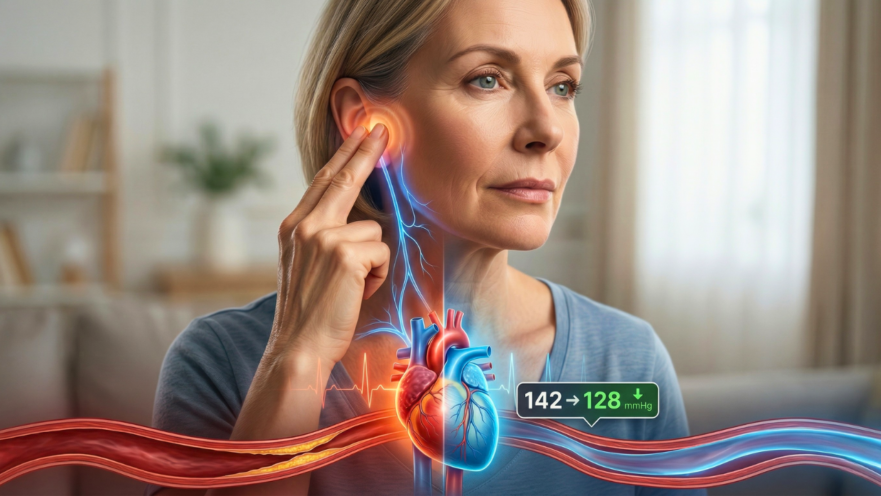
Yes, you read that correctly. One of the fastest ways to lower your blood pressure involves a gentle ear massage. This technique, known as auricular acupressure, is a powerful way to tap into your body’s innate relaxation mechanisms. It’s discreet, requires no tools, and can be done anywhere—in your car before a stressful meeting, at your desk, or on your couch.
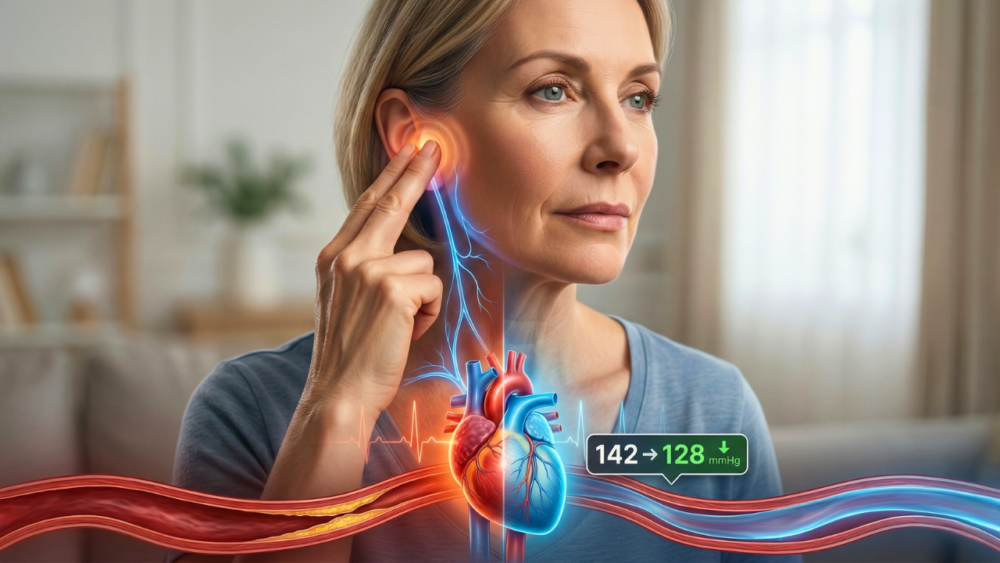
Here’s how you do it: Using your thumb and index finger, gently take hold of your ear. You want to focus on the inner, cartilage-rich parts. Apply light, continuous, circular pressure, massaging the entire ear but paying special attention to the central, hollow area where the ear canal begins to form. Do this for about 90 seconds on both ears simultaneously.
So, how can rubbing your ears possibly affect your blood pressure? The secret lies in the vagus nerve. The ear contains a specific branch of this nerve, which is the main highway of your parasympathetic nervous system. Think of your body as having a gas pedal and a brake pedal. The sympathetic nervous system is the gas pedal—it triggers the “fight or flight” response, raising your heart rate and blood pressure when you’re stressed or in danger. The parasympathetic nervous system is the brake pedal—it controls the “rest and digest” response, slowing things down and promoting calm. By massaging your ear, you are externally stimulating that vagus nerve, essentially telling your body’s control center, “It’s okay. It’s time to relax.” This activation acts as a neuroanatomical shortcut to calming your entire body. The result is a lower heart rate, a dilation of your blood vessels, and a measurable drop in your systolic blood pressure—often between 5 to 8 points in just 90 seconds.
2. Use a 60-Second Guided Body Scan
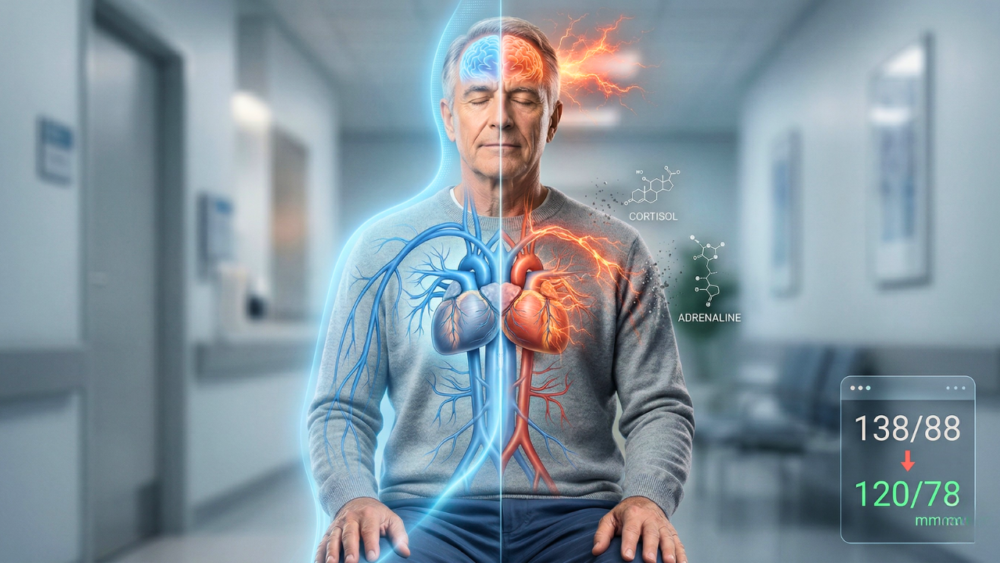
If you believe your blood pressure is purely a physical issue, you might be surprised to learn how profoundly your thoughts can control your physiology. When you’re under mental or emotional stress, your body releases hormones like cortisol and adrenaline, which cause your blood vessels to constrict and your blood pressure to spike. A guided body scan is a mindfulness technique that directly counteracts this by shifting your focus and calming your mind.
This isn’t complicated meditation; it’s a simple, 60-second exercise in awareness. Here’s the process: Sit down in a comfortable, upright position with your feet planted firmly on the floor. Close your eyes. Bring your full attention to the soles of your feet. What do you feel? Notice the points of contact with the floor—your heels, the balls of your feet, your toes. Imagine a warm, gentle mist of awareness enveloping your feet. Then, slowly begin to scan that awareness upward. Move your focus to your ankles, then your calves, your knees, and your thighs. Continue this slow scan up through your torso, your chest, your arms, your neck, and your jaw, all the way to the very top of your head. As you focus on each part, simply notice the sensations without judgment. Is there tension in your jaw? A feeling of warmth in your chest? Just observe.
This act of focused, non-judgmental attention pulls you out of the cycle of stressful thoughts that keep your body in a state of high alert. It shifts you from that sympathetic “fight or flight” state into the parasympathetic “rest and digest” state we discussed earlier. As your mind calms, it sends signals to your blood vessels to relax and dilate, which in turn lowers your blood pressure. The more you practice this, the better you’ll get. With consistency, you can perform an effective body scan in about 60 seconds and achieve a significant drop in your numbers, giving you a powerful tool to manage stress-induced blood pressure spikes throughout your day.
3. Try a Warm Water Foot Soak
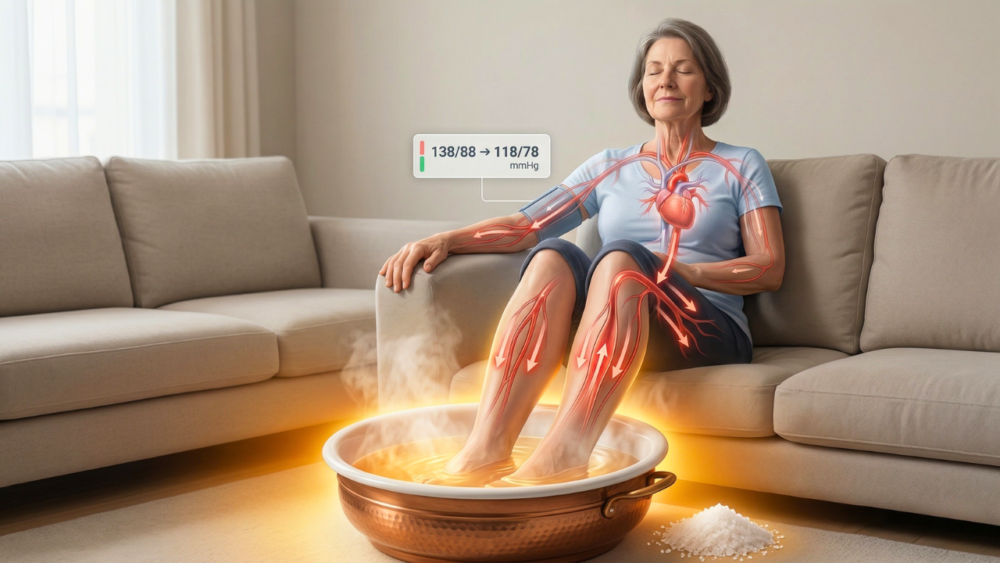
This last technique is a personal favorite because it feels like a luxurious self-care ritual, yet it’s a potent therapeutic tool. It may also seem counterintuitive. Many people associate heat with increased heart rate, so how can a warm foot soak lower blood pressure? The key is that localized warmth applied to your extremities has a very different effect than being overheated.
Here’s what you need to do: In the evening, fill a small tub or bucket with warm water. The water should be comfortably warm, not scalding hot. You want it to feel soothing, not shocking. Soak your feet for 10 to 15 minutes. You’ll likely notice a drop in your blood pressure after just a few minutes, but soaking for the full duration provides the maximum benefit. For an extra boost, add a cup of Epsom salts (magnesium sulfate) to the water. Magnesium is a natural muscle relaxant and is absorbed through the skin, enhancing the calming effect.
The science behind this is fascinating. The heat from the water causes the peripheral arteries in your feet and legs to dilate, or widen. This process, called vasodilation, draws a larger volume of blood away from your core and down toward your feet. This redirection of blood flow effectively decreases what is known as total vascular resistance—think of it as reducing the overall traffic jam in your circulatory system. With less resistance, the pressure against your artery walls naturally decreases. This simple 15-minute ritual can reduce your systolic blood pressure by up to 10 points. Even better, studies have shown that when you do this consistently—about four to five times per week—it can contribute to a permanent reduction in your baseline blood pressure.
Your Health in Your Hands
Managing your blood pressure doesn’t always have to involve a pharmacy. As you’ve just learned, you have powerful, simple, and effective tools at your disposal. Whether it’s a 90-second ear massage, a 60-second body scan, or a 15-minute foot soak, these techniques empower you to take an active role in your cardiovascular health. They work by directly influencing your nervous system and physiology, proving that small, intentional actions can lead to significant and positive changes. Try incorporating one of these into your daily routine and see for yourself how you can calm your body and lower your numbers, one simple step at a time.
Source: Dr. Mitch Rice